05 August 2007

Plus, in real life, Kiefer totally put the smackdown on a Christmas tree.

So on Friday night Kira and I and some friends went and saw the opening-night showing of The Bourne Ultimatum (a film for which, all through the anticipatory months, the proper title eluded me. Consistency is so vital to my subconscious that I only ever remembered it as The Bourne Ubiquity. So it goes). Let me say, front and center, that I really, really enjoyed the movie. I am a fan of the Bourne franchise and I think they managed to maintain the smart action and intrigue of the first two very well. I recommend them all. They hold up to multiple viewings and are worth your time.

But as we left the theater, a question started to form in my mind, and it has kept me a little preoccupied in the days since. So I offer my quandary to the Universe:

Who is more of an absolute badass: Jason Bourne, or Jack Bauer of 24?

This is not as simple as it might seem at first gloss. Yes, of course, Jason Bourne is a mentally-reprogrammed human killing machine, a $30 million rogue assassin with reflexes honed to a keen razor edge. Yes, Jason Bourne can slip effortlessly in and out of identities and countries and has the smarts to completely befuddle the American intelligence establishment.

But, at the beginning of Season Two, Jack Bauer cut a man's head off with a hack saw.

Now, don't get me wrong. On screen we see Jason Bourne accomplish some amazing things with simple household objects. He stabs a man with a pen, knife-fights with a rolled-up magazine, blows a house to smithereens with a toaster, and in this most recent movie he hands a man his ass using a coffee table book and a hand towel. You get the feeling he could invade a small country single-handed armed only with the most recent issue of Martha Stewart's Living. Clearly, Jason Bourne brings a whole new meaning to the phrase "domestic violence."

However, Jack Bauer cut a man's head off. With a hack saw.

Jason Bourne was a government killer. He speaks seemingly uncountable numbers of languages. He has more fake identification than an entire high school graduating class. He can take on an entire room full of armed men and survive.

Nevertheless, Jack Bauer removed a man's head with a hack saw, put the head in a bag like a bowling ball, and handed the bag to somebody after driving across town with it in his car. On network television.

I heard a story once. It goes like this. While Bruce Lee was still alive and teaching kung fu in Hollywood, there was only one student of whom he admitted being afraid. He feared Steve McQueen. He was afraid of Steve McQueen, it is reported, because, in Lee's words, McQueen "simply would never, ever stop." Knock him down, he gets up. Unrelenting. It was unsettling.

To admit this, of course, does not in any sense diminish the total badassness of Bruce Lee. It simply highlights a little-known but universal state of affairs: no matter how bad you are, there is one thing you will come across in your career as a badass that might, just might, give you the freakin' willies.

And so, as I said above, mad props to Jason Bourne, or whatever his real name is. He is certainly bad.

But, at the end of the day, I still think I'll put my money on the hacksaw.


Categories: ,


18 July 2007

Business as Usual

So I was listening to NPR yesterday morning and heard the hue and the cry being issued over at the Dow Jones corporation like shares of common stock over the takeover bid being hoisted up the flagpole by rogue pirate Rupert Murdoch. He might take over The Wall Street Journal.

The fear is great. Editorial standards may be compromised. The independence of this flagship of journalism may be steered instead to serve the biased business interests of Murdoch's vast financial empire. And, most clearly, there is a fear that whoever might mount a successful takeover bid - be it Murdoch, Mordor or Moloch - will in the end slash the company and leave it in tatters and ruins, a shell of its former glory. NPR's David Folkenflik can be heard probing the gravitas of the situation, asking after the concerns of the Bancroft family, Dow's major shareholders, and wondering aloud if this "exemplar of American journalism" will be sullied.

Give me, as they say, a break.

To blanch at such possibilities is, to my lights, simply to confuse a corporate mouthpiece like the Wall Street Journal with something of actual value to the Life, Liberty and Pursuit of Happiness in the day-to-day existence of the majority of American citizens. You know, things like drinkable water, clean air, secure jobs, and affordable health care. The folks at NPR's business desk seem unable to think of this newspaper in terms other than that which one, in days gone by, would have considered reserved for national resources (which can - but should not be - strip mined) or national ideals (which can - but should not be - compromised).

But this takeover is not of that class of debacles. It is precisely the sort of thing the "independent" editorship of the Journal has been championing since...well, there's never been a time they haven't championed it, actually. Leveraged buyouts making the way for tyrant CEO's to radically gut once-proud and -prosperous companies leaving mountains of pink slips, decimated communities and worthless pension funds in their wake is the very gut and gristle of what the Journal lauds on its pages. Simply look at Flint, Michigan or listen to glib economists gush about sneaky corporateering to the likes of Tony Robbins or on financial websites: the business of this country is business, and this is what savvy businessmen do.

So, as for me and my house, there will be no tears shed for a lost Eden of journalistic independence unstained by the apple juice of Murdoch's business interests. Murdoch, for my money, is just the most recent and the most visible of the snake-oil salesmen who have been running this country since the Boston Tea Party: a bunch of Anglos who are thinking with their pocketbooks, disguised in native drag to make us all buy the ruse that they actually belong here, dumping our Life, Liberty, etc. over the side of the ship in the name of their representation and happiness.

Let the Wall Street Journal hang, say I. And may its readership - who so often seem beyond the touch of conscience or consequence - tremble in the shadow of its swaying. Now that would be an exemplar to American journalism. Wouldn't you agree, Mr. Folkenflik?

14 June 2007

Riding with the Driver

So I was walking through Hillsboro Village yesterday morning - it was early and my car was being fixed at the local repair shop - and I was walking out of the art gallery at the end of the street when I was the recipient of some free-wheeling evangelism.

I say "free-wheeling" because said evangelizer was in motion, leaning out of a car window as it went through the heart of the Village block there. Also free-wheeling because it was sort of "gamble" evangelism, guerrilla evangelism. Shot-in-the-dark evangelism.

Here's how it went down.

I own a lot of t-shirts, and (as many of you know) a goodly percentage of these are Superman t-shirts. So I had one on yesterday, and its hard to miss - big red "S" and all. And as I walked out of the gallery this dude leaned out of the car window and shouted - near as I can tell - "Hey, bud, even Superman needs Jesus!"

As is my wont, I reacted as I usually do. I raised my fist triumphantly and shouted back, "Amen."

But then I was given to ponder, as his car continued to slowly pass me by. I noticed the "Got Jesus?" bumper sticker on the back of the car, and noted as well his goatee and the foreign make of his sedan. Who was I dealing with, exactly? A born-again Emerger? A backsliding Baptist who feels guilty he got drunk last Friday and is trying to do penance? What assumptions was he making about me, anyway? What assumptions did I make about him?

I wonder sometimes what sort of image I present to the world. What does the casual observer see when their eyes behold me. I honestly have no idea. In my life I have run a curious gamut: atheist, to eastern-spiritualist, to christo-pacifist, to evangelical protestant, to somewhat-traditional-somewhat-crypto-somewhat-militant-catholic. No matter where I've been, or thought, and no matter where I've landed, I guarantee you there's always somebody somewhere still thinks my ass needs to be saved.

Not that I mind that. Somebody somewhere is likely right, at any given moment.

But what about this moment, yesterday? This drive-by proselytizer, this missionary in a Mazda? The interaction was so brief, I still don't know exactly what was happening. Was it merely an affirmation of the lordship of Christ, even over cartoon characters? I can get behind that (just please let's don't sing about it, please). Was it some sort of Isaiah gig, denying the reality of the false powers and the idols of the world (as represented by that trademarked and TIME/Warner besmirched "S" I was sporting on my pecks)? I can get behind that, too.

Was it a gesture, an assumption, that I was lost? Needed to hear the Good News? Perhaps. But how effective is such a shouted, probably mis-heard soundbite over traffic noise and a million other distractions? Wouldn't it have been more classy to stop the car, in a sort of reverse-Eunuch-on-the-road deal, and actually get to know me for a minute, find out where the scripture was sticking in my craw, if at all?

I think of the old story the radio evangelist Bob George tells, about how he would grill his young son after school, whenever the boy mentioned a new friend. "Did you tell him about Jesus?" George relates this story to illustrate the danger of evangelism-by-the-numbers, of when "spreading the good news" feels more like the point-spread in a football bet. (He doesn't ask his boy that question anymore.)

I guess what I'm saying, both to that long-gone guy in the car and now to all of you, is this: Yes, when the time comes, even the stones will shout. The cars will shout, too, of their own Accord (sorry), and proclaim the real Order of the world and who is in charge. Everything will. Every tongue confessing, every knee bowing.

But we don't live in that time, yet. Here and now, it is not enough to shout a platitude. Here and now, the way forward is the same as its been for the last two-thousand years: the conversation on Mars Hill, the feet dusty from the road (not the accelerator), one cloak, no pouch. Slow time and needy interactions - mutually needy. Not the kind of "I've got the answer you've got the need" jazz that so often gets passed off as compassionate Christian "being in the world but not of it."

I hope, when my moments come - to witness, to "spread the Good News," to even (God forbid) join the ranks of the martyrs - I hope I'm moving slow, and doing a lot of listening, and hearing where this soul is coming from before I start trying to act all high and mighty about where its going. I hope.

And I read somewhere that hope might not be in vain - so maybe there's hope for me. And for the guy in the car.

That'd be super.

12 June 2007

Of the Six Things That I Love, Here are Five.


1. The San Antonio Spurs

2. Brian Eno's Oblique Strategies

3. Liz Phair's mouth (see left)

4. Bartlett Pears

5. Pope John Paul II


Thank you very much. You're on your own. Goodnight.

30 May 2007

Unfortunately, you can't exorcise Maxwell's Demon

So, its a curious thing about ovens. Have you ever noticed?

Let's say you want to heat up a nice tasty batch of chocolate chip cookies. Mmmm mmmm good. So you preheat the oven to 350 degrees, drop the dollops of dough on the non-greased cookie sheet, and pop them in for 10 (gooey) to 12 (crunchy) minutes.

Now, the yumminess before us likely distracts us - at this point - from paying much attention to this matter that I now want to foreground, but let's tarry a moment and ask the question as the cookies cool:

What's going on with the oven?

The oven is cooling too, you see. 350 degrees is hot (that's why you own "oven mitts"), and it takes a while to cool down. In fact, I bet if you went back a half-hour later the inside of the oven would still be at least a little warm to the touch. The heat is dissipating, going elsewhere, but it takes time.

This is thermodynamics in a nutshell.

Here, on the Earth, we are basically moving a more-or-less static amount of heat around. In daily life, it looks like this: You turn on an air conditioner, and the heat in your home is transferred outside. You eat the cookies, and your body chemically burns them to nourish you. When you feel the wind or watch a rainstorm, you are seeing the effects of these temperature differentials at work on a slightly larger scale. On an even larger scale, as the Earth passes through the cold void of space, we lose some of the heat held in the envelope of our atmosphere - an amount that is more or less equivalent to the heat we collect from the thermonuclear reactions of the Sun burning some 93 million miles away. The amount of heat stays pretty much the same, it just moves from place to place, so some areas are temporarily hotter than others.

So our planet is a pretty efficient heat-exchanger, both on the macro scale (we lose heat at about the same amount as the Sun gives us heat) and the micro (Honey, turn on the AC, please).

I watch television so rarely that I am always amazed (agog? apoplectic? anguished?) when I am in a situation when I can spend a few minutes channel surfing. That happened today (I'm staying in a hotel for a work conference) and I happened across a show called Sunset Tan.

Now, on a lot of levels, this show is a study in thermodynamics. It is, if you will, all about moving heat from one place to another. In just the few minutes I watched it, this much was clear.

I was particularly struck by the nine year old girl, brought in by her mother in order to be perfectly tanned for school pictures (the young lady, by the way, got the "cocktail" package - both the bed and the spray - the same one that Britney had gotten earlier that day. "You want the same as Lindsay Lohan, don't you, honey?" asks the mother. Enthusiastic nodding). "This is L.A.," the bronzed twink ex-busboy manager opines, "You've gotta have the darkest tan."

Later the show dissolves into the sort of interpersonal acrimony so resplendent these days in reality TV (the regional manager who bitches out the store managers for not being available "24 hours, seven days a week" even though none of the managers can get the regional manager to return their text messages or phone calls was an especial treat). I have no idea if these people are real, or if this is just subtle parody - but I guess in L.A. there is no way to tell. I mean, in a land of that much sunshine, the fact that one would go to a tanning salon at all sort of begs the question, doesn't it?

The fact that reality TV shows like like American Idol have managed to turn the cold shoulder of rejection and failure into a hot career opportunity is itself a fine illustration of a key thermodynamic principle. In any closed system, unless external energy is added, differences and extremes will eventually equalize and become indistinguishable. Like the Earth upon which American "culture" happens, a state of stability is reached.

This is a roundabout way of admitting that - even though I really want to - I don't think I can, in good conscience, blame American popular culture (as reflected in L.A.-based reality TV) for the problem of global warming. And it breaks my heart that I cannot. But I can't. Reality TV simply moves the heat around. It does not significantly increase our atmospheric temperatures - no more than the hot air in Washington, at any rate.

Instead, I offer this explanation for the current climactic crisis. Not a popular one - in fact, I have not heard it ventured or discussed elsewhere. So it may simply be my kookiness. That being said, however, the theory does attend to these matters of thermodynamics that have preoccupied this little meditation.

Let's return for a moment to that oven with which we started all this, and the time it takes to cool. Like the atmosphere of the Earth, the lining of the oven is a relatively efficient insulator. Left to its own devices, the oven hovers at just-about room temperature. However, when you add a great deal of heat to it, it holds it for a long period of time. When energy is added, the heat dissipates relatively slowly. When you bake the cookies, it takes time for that 350 degrees to go elsewhere.

Now imagine what would happen if you heated that oven to 700 degrees. Then 1400 degrees. Then 2800, and then... you get the idea.

It would take a bit of time for that heat to go somewhere, wouldn't it? And while the temperature difference between the inside and the outside of the oven was equalizing, the room would heat up, and then, from the room, to the outside, and so on. Eventually, you wouldn't notice the heat differences because they would seem relatively equal. We are, after all, dealing with relative temperature extremities. Even 2800 degrees is a somewhat reasonable temperature for the Earth, and so we are, at the end of the day, still only moving heat around a bit, not significantly adding to it within the system.

But what would happen if the temperature in that oven was heated to, say, a couple of million degrees?

Now suddenly we are dealing with a different order of magnitude. This is not a natural temperature for the insulated envelope of atmosphere around the Earth - in fact, the only natural object anywhere near us that generates that kind of heat is the Sun, and it is not actually near us (except in cosmic terms). If you put that kind of energy into your oven, and then opened it, I guarantee you it would really heat your kitchen when you opened the oven door, and likely the whole neighborhood and town, to a temperature that would make things like molten steel seem as innocuous and gentle as, say, a tanning bed.

And because the Earth is, like your oven, a pretty good insulator, the heat you released from you kitchen would linger around a while, heating a greater and greater area as the enthalpic and entropic forces of thermodynamics equalized across the system. The difference being that a couple million degrees goes a lot farther in its effect once equilibrium is again reached.

What I want to point out - and what I haven't heard mentioned in any of the discussions of global warming so far - is that during the middle part of the last century our country (and several others) did exactly what I have just imagined here, with our oven, in the form of nuclear testing in the atmosphere and, later, underground. Not just once or twice, but literally thousands of times.

Though each of the blasts had their own characteristics and differences, one common feature to most, if not all, of them is this: the initial burst of prompt and thermal radiation coming from the fissile core is, at its coolest, about twice the temperature of the surface of the Sun (for some fission bombs it goes as high as three times the Sun).

The United States alone has detonated over a thousand fission devices of various types, not to mention the fissile cores of commercial and military nuclear reactors across the planet. Each of these is generating a glowing spark of new heat into the relatively efficient insulation envelope of the Earth. Not, in other words, simply moving heat around, but creating new heat - vast and unimaginable amounts of it - in isolated but iterated and reiterated instants for almost forty years.

Where on Earth do we foolish mortals (who now wield the hammers of the gods) expect all that heat to go? We have equilibrium with one (one!) comparable heat source that balances the loss of heat in our atmosphere and its over ninety million miles away.

It has always seemed strange to me, having survived the paranoia of the Eighties, that we were so afraid of the effects of nuclear war when we had been, for an entire generation, effectively having one right here in our own country - in Nevada, in New Mexico, in the South Pacific, and high in the stratosphere.

That last one I mentioned - a test called Starfish-Prime - had a measurable effect on the Van Allen radiation belts that interact with the Earth's magnetic poles, in addition to crippling human-made satellites and disrupting communications and electronic equipment across the northern hemisphere. The forces created in nuclear blasts - the electromagnetic and ionizing - are well-known to linger and bounce through the Earth's atmosphere and magnetic fields for years after a blast. Why should we expect the thermal effects to be any different?

They aren't any different. The great actuarial table of thermodynamics is against us. In a closed system (like the relatively efficient insulator of the Earth's atmosphere) heat stays around, becoming general and ubiquitous, until it bleeds away. Slowly. And if you add insane amounts of heat to such a system - even if it doesn't seem to heat everything at once (because these things take time) it will. Don't just trust me: I am merely quoting the experts.

At the turn of the century James Clerk Maxwell asked what would happen to an imaginary closed system if you could put a demon into it - one that would be able to sort out the high-energy molecules of a gas from the low energy ones. The demon would be able to sort out energy problems without creating more energy problems - would be able, in other words, to deal with heat without creating more heat. A wonderful, if wholly imaginary, solution (and one that would make those in the present administration, perhaps, blush with hope): salvation without sacrifice; an instantaneous reversal of our slow and dedicated penchant for destruction (self- and otherwise).

In times such as these, such a creature might be useful. Some might argue we should find such a demon and make a deal with it. Others might observe that it may well have been such a deal that got us in the present mess in the first place.

Perhaps it is already too late for those sorts of eleventh-hour bargains. Too late, at any rate, for a "quick fix" that doesn't involve some very, very hard sacrifices. It's a devilish reality, even compared to the treacheries of an L.A. tanning salon.

So that's my theory. You can disagree with my conclusions, and I am happy to debate it over a plate of chocolate chip cookies (I prefer gooey). Though I rather think, from here forward, we might be wise to eschew debate in favor of something more effective. Like prayer.

25 April 2007

Aaaarrrrrrrrrggggggggghhhhhhh


So my copy of Word apparently didn't agree with some aspect of my virus protection software, and so my computer simply destroyed irreparably the third chapter of my doctoral dissertation.

Soon, oh so very soon, my laptop will be running Linux.

Meanwhile, I have a resurrection to perform, if you will excuse me...

21 April 2007

You Never Know


So I was searching on YouTube just now for Feyerabend (either my old band or the man himself - I had no idea what to expect) and I found this.

Reminds me of the old days - the movies and the music we made in the early days of Frozen Taco. Glad to know things like this still exist.

18 April 2007

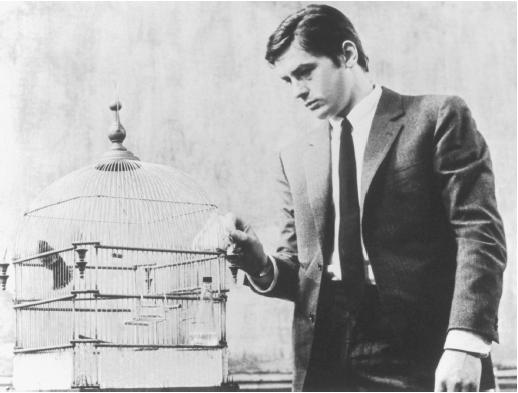
Would you let this man take your daughter to the movies?

i sing of Slavoj fuzz and sniff
whose twitching heart rejoiced at, say,
the Lacanian objet pe-tit a

(with apologies to e.e. cummings)

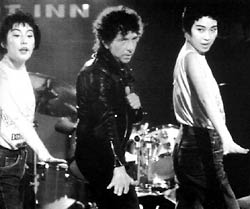
I know this probably makes me something of a heretic, but I feel the urge to admit publicly that I am really much more of a fan of the mid0career Bob Dylan than I am of either his early recordings or his recent PR resuscitation, lingerie ads and all. I am thinking in particular of the mid-80's, slightly-post-Christian phase albums like Empire Burlesque and Infidels.

It's not, of course, that I dislike the early Dylan. It simply strikes me that when everybody (and I mean everybody. English professors and everybody) start going on and on about how much of a genius you are, it might make for a body of work that is easy to mistake. And by mistake I mean, perhaps, not listen to (or not really) even if you have listened to it many, many times. Genius is like that. Genius is where this happens.

I think Dylan knew this. I think that this was behind much of his career self-sabotage, beginning but certainly not limited to the episode where the amps were turned up and everybody booed him off stage.

So I think this is partially why I love those forgotten albums so much. Nobody listens to them (well, I do) and certainly nobody owns 'em (well, I do) and absolutely nobody would tell you with a straight face that they were in fact the only Bob Dylan albums he owned (Yup).

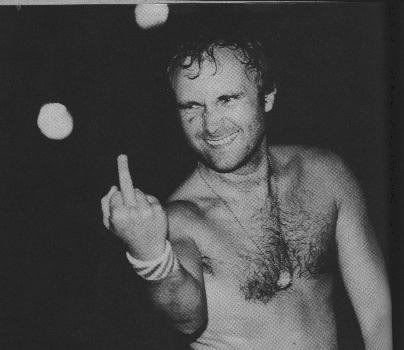
This is not merely me being some sort of perverse music snob (though perhaps it is some of that). The albums, in one sense, are terrible. Dylan looks thoughtful on the cover of Empire Burlesque sporting a blazer he could have easily borrowed from Phil Collins. You can hear overproduction, bad Yamaha synthesizers, and an unfortunate outbreak of Tom Petty and the Heartbreakers on some tracks. I fully admit all of this.

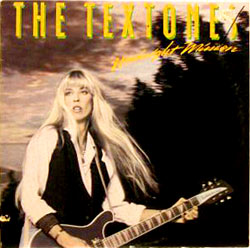
But these albums also have tender moments, where the backing band is the Textones and not Tom Petty, and the lyrics simply shine in their masterful brilliance. "Sweetheart Like You" and the insanely sublime "Jokerman" from Infidels would be easy redemption for me, if I wanted to grasp for them at this moment. But I will not.

No. My all time, without a doubt, absolute favorite Bob Dylan song is all the overproduced, Yamaha-infused, Phil-Collins-coated terror I alluded to above. I simply cannot get past how much I admire and esteem "Tight Connection to My Heart."

I just think it is a great song. I sing it in the shower and I cover it sometimes when there is a piano around or I am on stage. And it totally doesn't fit with what you are supposed to love about Bob Dylan.

And this is sort of how I get into the whole notion of Zizek's reading of the Lacanian Real as a disruption of the ideology we're all swimming in that should be shaping who we are entirely, only there is this constantly outbreaking perverse love that just interrupts the whole smoothness of it all and makes you stand in horror and banal joy at the fact that you really do like the back-up singers, the Yamaha synthesizers, even the Phil Collins jacket.

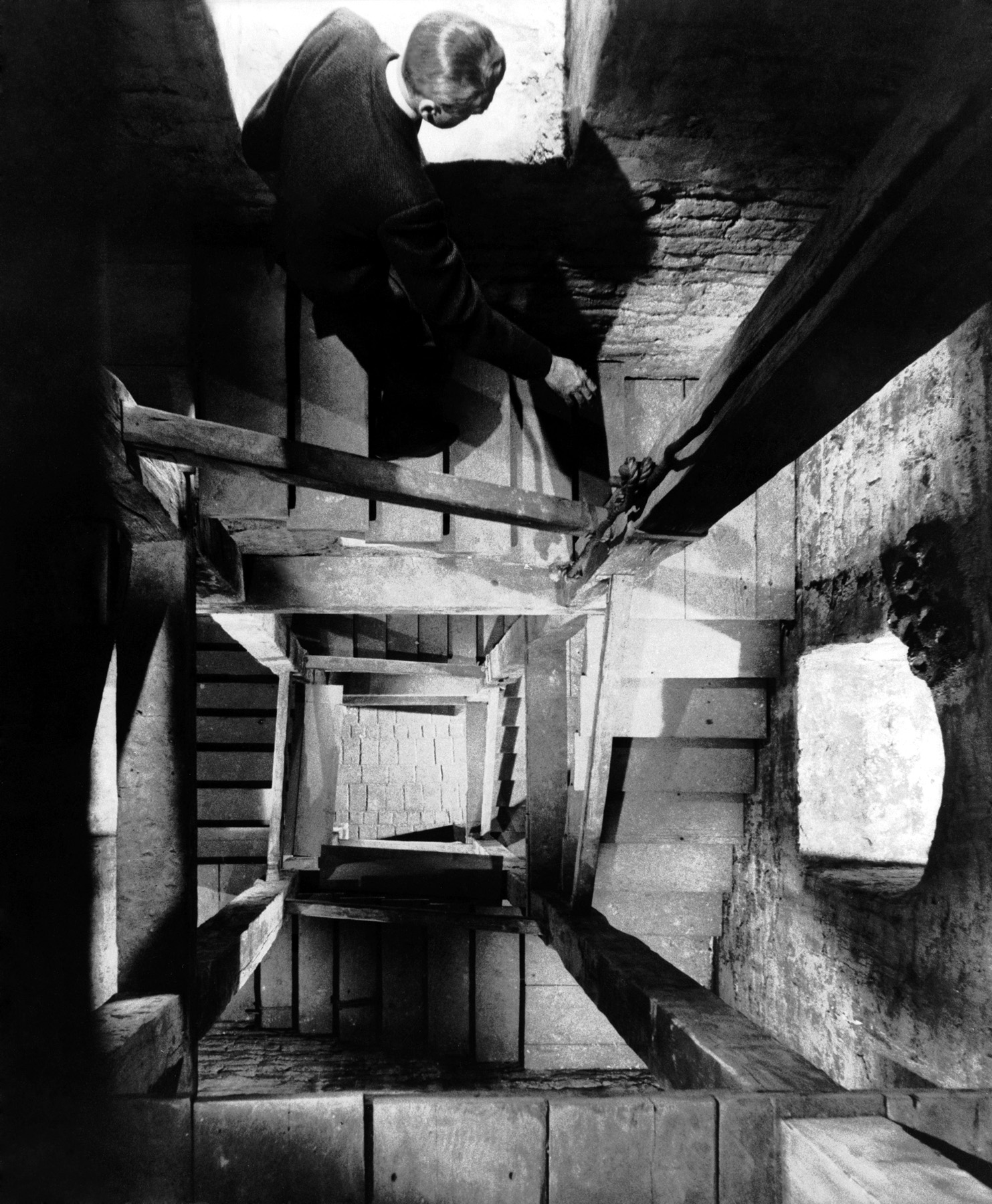
Like the hopeless protagonist of Hitchcock's Vertigo, we are always attempting to dye the hair of our object of desire to make things "right." Which, for me, would be the moment where I say "Yeah, I'm a big Dylan fan" without mentioning the perversity I have now admitted to you all. But there's always that Bell Tower, looming, pulling each of us toward what we least want to admit - the loves we fathom but do not contemplate, except in those moments when the CD shuffles in just the right combination, and Empire Burlesque makes the rotation again.


07 December 2006

The End of an Era

So the other night I made a pilgrimage, of sorts, and ran a bittersweet errand. I went to Nashville Used Musical Instruments and sold off the first "real" instrument I ever owned, my ancient Korg Poly-800 synthesizer.

Actually, "sold off" is generous. After lugging it around for the past fifteen years (the last time I seriously used it was 1996, for one song on the Feyerabend album) it had seen better days. It still worked fine, but was missing a power supply and a lot of its documentation. The upshot of this, however, was that the store was reticent to buy it off me, because the resale value was minimal given the work and parts they would have to put into it.

Now, you must understand, this was no mere piece of electronic junk in my universe. I had written my earliest songs on this thing, and (when I first received it, way back in 1984) it was a powerhouse of sounds and possibilities. While I no longer had a real use for it, I did not want to abandon it to some trash heap. It needed some sort of good home.

So we struck a weird sort of compromise. The Poly-800 had come to me, that Christmas all those years ago, with a pretty sturdy road case. The store agreed to buy that, and I told them I'd throw the keyboard in on the deal. So it goes (or rather, so it went).

In my fondest dream, some way or somehow this old synthesizer will find its way into a new home - maybe as the unit it now is, maybe as spare parts of some other keyboard - and some kid will get a hold of it this Christmas and more music will be made.

I'm sentimental, I know. But you must understand I hate, hate, hate parting with instruments. I form relationships with the things I make music with. They become a part of me. But in this case, it was clearly time to say farewell. Farewell and thank you. Thank you for "Keep Me Moving." Thank you for "Outside My Window." Thank you for "Renee," and for many many more songs through the years. Thank you.

Nashville Art: Past, Present and Future

The following is an article which I wrote which appears in the December 2006 issue of Nashville Arts Magazine.

It happened 25 years ago in Chattanooga. Ten years ago it swept Atlanta. As I look around Nashville, I want to ask, “Is it happening here?”

In other words, is the Nashville art scene on the brink of a convergence of grassroots and civic forces that might make the arts—all the arts, and not merely the musical ones—a permanent and prominent factor in city life?

“There’s a real optimism in Nashville right now,” says Herb Williams, who has become known in the Nashville art world both for his colorful crayon art and his very visible studio space above the Arts Company downtown. “There’s a real sense that this can work and it can happen. For the first time we have beautiful galleries and amazing art all in one block [along Fifth Avenue]. That’s never happened here before.”

In the mid-1990’s Atlanta was the center of a similar groundswell, a mixture of known ateliers and a sudden explosion of small art galleries and studios. Many of these were the result of determined efforts by cooperative groups of local semi-professional and amateur artists. Some of these groups (like the now-legendary Mattress Factory projects, the Light Monkeys, the Ballroom Studios, the BlueMilk group, and the West Hill Concept Union—a group of which I was a member) flourished for a few years, then struggled, then folded. By the turn of the new century a very few—the Eyedrum gallery and performance space and the YoungBlood gallery, in particular—had found a way to ‘make it work,’ and are still in operation today.

“I think a tremendous impetus for the energy these galleries had was the 1996 Olympics,” says Robert Cheatham, now Eyedrum’s executive director. “A much wider range of demographics came into Atlanta, with a concomitant lowering of the average age. I think the reason the ball kept rolling is because of the huge swell of population into the city and all the development in housing that came in the wake of the Games. That was a double edged sword, for sure, but it helped ensure there were a lot of young people, and they were the ones interested in what we were doing. They were the crowd that came to everyone’s openings, and not just ours.”

What the Olympics brought to Atlanta as well was the brief taste of what it was like to be a '24 hour' city. Cultural events occurred at all hours of the day and night, and they were affordable, and many absolutely free. Artists, musicians, and performers from across the nation and the world were suddenly everywhere in the city, and the atmosphere drew local artists out from their individual efforts and got them thinking about cooperative possibilities.

Tom Wegrzynowski, who is now finishing his MFA in painting at the University of Alabama, joined the West Hill Concept Union in 1998, after it had been in operation for two years. He considers this to be a defining moment in his development as an artist. “While I had my own studio practice, I was largely isolated from other artists at the time,” he says. “I consider joining the Concept Union to be the beginning of my professional art career. In that way I would say that involvement with an art collective was very influential in the development of my work.”

During these years it was not unheard of that Nashville-based artists would leave for Atlanta and not return, seeing vitality there that did not seem to exist here in the eighties and nineties. Allen Welty-Green was the director & composer of the Mind's Eye performance group - a multi-media company that produced many events in Nashville and across the southeast between 1986 and 1992. “We held the first event produced at the Darkhorse Theater. It was still an open church sanctuary at the time. We hung the lights and gave the walls their first coat of black paint. When Mind's Eye dissolved, I was unable to find the resources in Nashville to continue producing art in the same capacity, so I moved to Atlanta, where I already had a number of connections.” Now a member of the Eyedrum board of directors, Welty-Green has continued to produce dance and performance pieces since his move.

But Atlanta’s underground art scene has a very different face now than it had in those early days just after the Olympics. The energy and spark has faded in many ways, and this fact is noted and lamented by those who have been watching for the last three decades. One such observer is Jerry Cullum, a senior editor at ArtPapers magazine, based in Atlanta. “What I see now is that scene is splintering between a few remaining groups. There is some crossover and communication from Eyedrum to the YoungBlood gallery, and some crossover in a minor way from YoungBlood to a new gallery named Beep Beep. But I wish there were more.”

In many ways Atlanta is an example of what results when a groundswell of artistic energy explodes without a concerted civic effort to nurture and sustain it. “At YoungBlood we’ve been lucky to have a lot of support from local businesses, and we went to local colleges and found folks willing to work for us as interns,” says Kelley Teasley, who co-founded the gallery with Maggie White in 1997, “But it takes a lot of patience and we both have had to have other jobs to get by.” What seems to have hurt the Atlanta art scene the most in the years since the Millennium is that the efforts have remained too grassroots, without widespread and concerted support on the part of the city government.

Contrasts to this ‘hands off’ civic approach exist within a few hours’ drive in either direction from Nashville. Both Chattanooga and Paducah are high-profile examples of what can be accomplished when a city chooses to support and foster the arts on a community-wide scale. Twenty-five years ago it was exactly this sort of vision for the revitalization of Chattanooga’s downtown area that helped support the now very-successful Bluff View arts district, which boasts museums, studios and galleries just a few minutes’ walk from the Tennessee Aquarium and the city’s urban center. More recently, Paducah, KY enacted a massive “Artist Relocation Program,” which offered significant economic and business incentives, including interest-free housing loans, to artists willing to move to the city and foster its cultural life. The city also recently invested in a multi-million dollar performing arts center designed to attract musicians and performers of national caliber. “This program is a perfect fit for the community and its goals for the future,” said Artist Relocation Program coordinator Mark Barone in a 2001 interview. Since he spoke those words, many of those goals have been realized. The Lowertown area of the city now boasts well-established galleries and arts activities, and Paducah is now beginning to bank on its reputation as a cultural center in tourism revenues.

“Cities like Paducah and Chattanooga are really embracing artists as an economic development booster,” says Caroline Carlisle of the Twist Gallery, one of the galleries making up the now-growing collection of storefront studio-gallery spaces in the Arcades on Fifth Avenue. “I would love to see the powers that be realize these new visual art opportunities. I would love to see Nashvillians value the visual arts in their city, really embrace it and support it. People have to realize that if they want urban experiences like the Avenue of the Arts and Art at the Arcade provides, they have to support it with their pocketbooks as well as with their presence.”

All the artists I interviewed, from Nashville and across the southeast, stressed the importance of group efforts and working collectively to achieve common goals. Robert Cheatham encourages artists here to be self-starters, to get projects underway without waiting for anyone to give permission or even money. Herb Williams emphatically agrees, “I remember early days at Downtown Presbyterian Church, getting a chance to work with other artists there. We put in sweat equity and were part of the community together. My art responded to the elements of that situation. We need more opportunities for artists like that.”

But those opportunities may disappear if there is not an equal commitment at the level of city government to create the economic and civic support to help give the arts living, breathing viability here. There are definitely efforts on the horizon, for example the Nashville Civic Design Center, which is a nonprofit organization founded in 2000 which seeks to foster public dialogue about the direction of Nashville’s civic space. Public art and the support of artists have played a part in these discussions. But there is also a history of resistance among city government officials to consideration of the kind of widespread commitment that would move us in the direction of artist-friendly cities like Paducah and Chattanooga.

So what will happen in Nashville? Since I moved here in 2002, I definitely have sensed a similar energy growing all over the city—in East Nashville, and now downtown at the level of the local galleries—to that energy I felt when I lived in Atlanta. But I also am worried that some of the same civic difficulties that kept Atlanta from becoming a truly arts-and-artist-friendly city may be in effect here. The pieces are in place, and the choices that are made in the very near future will determine the cultural community and reputation Nashville will have for years to come. As artists and patrons, we are truly here at a portentous time.

“We’ve got the momentum, the people, and the galleries all around town moving forward like never before,” Herb Williams says, summing it all up for me. “It’s now or never.”

Categories:

01 November 2006

Zyklon-Barbie


Here's what worries me about America.

See, it's like this. Say that you're an ugly, mule-toothed skinhead race-baiting neo-Nazi. You are also a musician, and your career has been built on writing and playing songs that denigrate all the "mud peoples" and praises Aryan sensibilities and family values. Then, let's say, for example, you die in a tragic automobile accident. Very few people are going to notice, or care. Some might even cheer. After all, you were ugly. In our country, bad racists are ugly (natch).

But what, oh what, America, if your racists are beautiful?

The ugly racist of my example is, of course, Ian Donaldson of the white power band Skrewdriver. Outside of fringe circles of the right wing, Donaldson never garnered much notice. The songs Skrewdriver sang were not examples of high art - far from it. Humorless paens to the likes of Rudolph Hoess and testosterone pumped swastika waving were mostly the order of the day. Easy to dismiss these guys as kooks (because, um, they are kooks).

But what about Prussian Blue, my friends. What about Prussian Blue?

Prussian Blue, you see, are a folk duo made up of the teenage Gaede twins, Lynx and Lamb. They have delicate features, straight blonde hair, and winsome looks to give the camera. In its original incarnation, Lynx played violin and Lamb played guitar, though now they have graduated to a more robust, band sound. They look sweet - innocent, even.

Oh, and they sing Skrewdriver songs. Did I mention that they sing Skrewdriver songs?

The Gaede twins, y'see - in fact, the entire Gaede family - are virulent racists. Consider, for example, this selection of lyrics, penned by Lynx, for the song "What Must Be Done":

ALL the mud races must be banished,
For look at the world they have damaged.
Look around and what do I see?
Ugly brown faces staring at me.

Our people must look like my mom and dad.
They don't now and that makes me mad.
We don't want to be mongrelized,
We want to be Nature's Finest down deep inside.

Now here's what worries me. In America we seem quite eager to accept any lame or even hateful idea that comes down the flagpole, so long as the one handing it to us is attractive. We idolize the uncouth and the ill-mannered so long as they have a Hollywood address or a Prada pedigree. We obsess about JonBenet to the neglect of our own children and crave our own fifteen minute alotment of attention.

In such a milieu, it is not hard for me to see the possibility that Lynx and Lamb would get a sympathetic ear for their tripe. "After all," I can hear the voices saying, " they're so cute, their politics can't be all that bad..." At the very least, their "angelic good looks" are garnering the twins a rather high media profile - even when the media attention is less than charitable.

The media outlets in this country are notoriously fickle. In a constant craving for a new angle, I fear it is only a matter of time before some major news organization decides to give Prussian Blue a "fair hearing," in the name of some distorted notion of "equal time" or "free speech." If that comes to pass, we may find ourselves coming face to face with what America really values, as liberty and justice for all crumbles against the brute force of our national narcissism.

I mean, after all, they're only kids. And they're so cute...

11 October 2006

Built to Spill at City Hall, Nashville, TN September 24th, 2006

This is a testimony to the level of hipness of the staff of my local Vanderbilt Ben and Jerry's ice cream parlor.

So I walked in there one day several months back and was grooving to the tunes on the stereo. "What's this?" I asked. "Built to Spill's new album" was the response.

Neat.

Fast forward a month or so. I am a regular at this store, in all senses of that word, to the point that when I walk in, the staff just asks me how many scoops I want (because beyond that variable, the cone never changes). This leaves us time to talk about other, more important things. Like weekend plans.

What was up with folks on the staff one weekend a few weeks back was the Built to Spill show. So I piggybacked on their enthusiasm, bought a ticket, and went along.

I'm not sure who the first opening act was, but the middle act was Helvetia, and I am sad to say I wasn't impressed. The frontman seems to have some sort of hip indie-rock pedigree and all, but the performance and the music both failed to connect with me. The rest of the band gave the impression that they were very surprised to be on stage ("What am I doing here? Why are there lights? What's this? A bass guitar? What the Hell, people?")

I had intended to stay back in the crowd, but friends encouraged me to come to near the front row, and so I was in prime position for when Built to Spill took the stage.

I was not very familiar with the music, though I had gone to Napster and listened to enough to know I was interested. So when they actualy started, it was the best of all possible worlds: an enthusiastic crowd, music that was very listenable but that was new like an undiscovered country to me, and I was with people who sell me ice cream. I was pumped.

The band looks like a gaggle of math professors, and the lead singer looks two steps away from quitting the math department, moving to a cabin in the woods without running water, and starting to mail letterbombs. The surreal images projected while the band played did nothing to dispel this notion.

The music was energetic, complex, loud and very, very listenable. I was reminded a lot of Sunny Day Real Estate's last album in terms of vocals, and there are a lot of apt comparisons to Modest Mouse as well. What I liked especially is that the music goes on digressions in terms of tempo, time signature, and dynamics - but never loses its sense of melody. Melody, however, with a lot of clangy, crashing noise. I dug it.

The one downside was the overly-enthusiastic drunk frat boy who shouldered his way to the front and did the drunk white guy dance, running into me and the ice cream folks repeatedly. But this was minor.

On the whole, a wonderful use of my time. Recommended.

28 September 2006

Show with Tim Gilger at the Hall of Fame Lounge, Nashville, 9.23.06

This was the first time I had booked my own show at the Hall of Fame, and I was glad Tim was there to break the ice with me. I had had one of the worst weeks in recent memory leading up to the show, and was glad to have something familiar and comforting to retreat to on a new stage.

The sound was really good, and a bunch of folks came out to see the show, and I felt more and more comfortable up there (and not just because of the beer). Tim played several old favorites plus one new one he had shared with me right before the show. I did my best to add shaker and harmonies, and I think all that worked well.

I appreciated the folks who came and the fact that they filled the room so much - thanks, Disciples House crowd!

My set: Caroline, N Judah, The Life You Save May Be Your Own

Categories:

Almost Famous

I've been reminiscing lately about one of the stranger periods of my life - the year in Atlanta when I was a professional in-home caregiver.

I hadn't intended to come into that line of work, mind you. My first job out of college was being a shipping-recieving clerk on a loading dock for a big chain store in Lenox mall (I graduated with a degree in philosophy, only to find that no one was hiring philosophers in Atlanta. So: loading dock). I worked that job very well for about a year (I think I was the only clerk in Lenox whose manager gave a raise to in the hopes of keeping - I was not making enough to live on with the student loans and I was starting to look for other options) and I had read an ad looking for child care workers, and so I applied.

Those of you who know me will be raising their eyebrows at this point, knowing my long-standing antipathies. But see the logic: I really wanted to teach, ultimately, but had no idea how to go about that and no credentials to do that. So this seemed like a 'back door' to me - a temporary solution to get me moving in the direction I wanted to go. Paying my dues, if you will - what my Ma used to term 'cleaning the turkey.'

The service I interviewed with was on the north side of town, and was run from the lower level (I hesitate to call such well-furnished rooms a 'basement') of a house off Roswell road. The process took a couple of hours, and at the end, the consultant I was working with told me that there were, in fact, no child care positions available for me. But they did have this one, slightly strange, case. Would I be willing to hear about that one?

I was willing. The loading dock had made me very willing.

It turns out that I was being asked to consider becoming a caregiver for Steve, a 35 year old man who had been involved in a terrible accident. He was born with blood that coagulated too readily (think of the opposite of haemophaelia) and had been hurt in his early thirties in a basketball accident. He went up for a layup, was knocked down, and hit his head. He didn't know that he was concussed, and that a clot was forming in his medulla (the brain stem that controls motor functions) which would lead to a massive stroke. That afternoon he laid down for a nap, and didn't wake up for six weeks.

When he finally awoke, he had lost all his fine motor control, most of his speech, his ability to walk, he had become acutely walleyed, and his emotional pallette had been decimated. He still had gross motor function, but that meant that he was, for eaxmple, as likely - more likely, in fact - to knock over or break something as pick it up. Moreover, when he spoke to you it was vaguely like talking to a Picasso painting, with regard to his eyes. I don't intend this description in a mean way - I just want to convey that his physiognomy was one that many found a bit unsettling.

So when I entered the picture, Steve had been in this state for about five years. He worked hard to keep his body in good shape, and to fight every day to regain little pieces of his abilites. I would aid him in his daily exercise regimen at the YMCA, and (with the aid of a thick leather belt around his middle and a walker) help him work on slow, laborious walks - mainly to and from his van at the beginning and the end of each of our days together.

Now, among the differently abled, as one might imagine, there is a sort of hierarchy. And this hierarchy is often based upon financial resources. Part of what made my work with Steve possible was that he had vast economic resources (from both his family and from a medical settlement surrounding his accident). This allowed him to have a very functional, semi-independent life - one that would not be available to everyone in his physical condition.

It also allowed him to get into all sorts of mischief, and that's really what I want to muse about here.

Because of the uniqueness of each traumatic brain injury (TBI) on individual patients, every injury of this sort presents its own set of interesting complications. Steve was extremely limited physically, but he still thought like an athletic and attractive 35-year-old. Which means, mostly, that he tried constantly to flirt and chat up women. The difficulty was that many women were not patient with his speech, and even those who were found his uncanny appearance unsettling.
What this led to was a cycle of despair. TBI victims often have limitations on their brain's stamina to process emotion and they often evince what is referred to as "blunted affect" - which means they sort of 'cut corners' on emotions at times, seeming insensitive or short to folks who don't understand the mechanics of the injury. Combine this with the constant frustration of desire, frustration resulting from physical limitation, and you can imagine the depths of sadness and rage that might result. Steve and I talked about this a lot, when he felt like talking to me.

But Steve was not fully limited, simply because of his financial resources. And it was interesting to watch the effects of wealth mixed with blunted affect.

In the time I knew him, Steve went tandem skydiving, took a trip to the bottom of the Grand Canyon on a mule (with a specially crafted saddle to support him), and was flown in loop de loops in a glider plane. For each of these adventures, part of my job (in addition to the regular tasks of care) was to videotape the proceedings, and later edit the footage together to a punchy soundtrack.

With each adventure complete and documented, we sent these tapes to David Letterman.

"I've got to get famous, David," Steve would tell me repeatedly. "If I can get on David Letterman everything will be fine. I know just what I'll say to him..." and he would proceed to tell me, in halting growls and slurs, how the conversation would proceed.

I edited the tapes and dutifully sent them, and I found myself wondering what, if anything, the staff at the Letterman show thought of this strange phenomenon - if, indeed, they thought of it at all. I wonder if the tapes even ever got to them, or just were lost to the mailroom and mid-level factotums.

The effects of economic difference on the perception and ability to live differently is, of course, nothing new. In older days the difference between being labelled 'eccentric' and being confined to a sanitarium was often contingent upon one's breeding, one's family resources. But in the years since working with Steve I have often wondered, as the likes of "American Idol" and its cousins have flooded the airwaves, the extent to which the same motivations which drove Steve are driving the hearts of these celebrity-wannabes.

By which I guess I mean, to what extent, and why, do we all seem to think that the answer to everything is to get famous, to get on televisions, to talk to Letterman?

And I don't just point that finger at my culture, at those around me. When I send out CD's to magazines to be reviewed, or get my mug up on stage for my fifteen minutes, there's that same desire. Watch me, love me. Make me more complete, meaningful, neccessary than I currently am. Validate me, because I feel disposable and broken.

In the end, I probably have spent an equivalent amount of money and time on musical equipment as Steve did on adventures and videotape. And who knows how much the "American Idol" crowd spends on image, haircuts, publicity? The mind boggles.

Being as I don't own a TV, I don't have much occasion to check in on the Letterman show, but the few times a year I do see it, I am always a bit curious. I wonder if I'll ever see Steve on it. I wonder, if I do, if being-there will have done the trick he wanted it to. I wonder if everything would be fine, then. I wonder.


23 September 2006

New music. Yes. New music.

Okay. So instead of working on my dissertation, I have been recording demos of music. Do not tell my advisor.

You can hear Circuit on my MySpace page.

You can hear the Massanetta Conference Theme Song on my music downloads page (at the bottom, under 'Demos')

I should probably go to bed now. It's late.

Sleep tight, everybody.

Categories:

12 September 2006

Show with MIke Dominguez and Benjamin Blake at the Commodore, Nashville, TN, 9.8.06

I had not had a chance to play with Mike for a couple of months, so this was a real treat. After all the times we have done shows together, I have a real comfort singing backup for him and adding elements like shaker and such. He played a relatively new song halfway through the set, which I hung back on. But it was really great to see both he and Jen in the same place at the same time (Jen just had a little baby, so such dual sightings are rare these days).

I had only heard Benjamin once before - a few weeks ago at Christopher Pizza when he was doing one of the Wednesday Music Society nights. He utterly blew me away then, and I was anxious to hear him at the show. He didn't disappoint. A very delicate, intricate style with a lot of good taste in his arrangements, plus a voice that mixes equal parts Michael Franks and Nick Drake. I was really pleased to have him on the bill. Watch for him - he's going places, and soon.

As for me - I have to say the sound at the Commodore, at least for me on stage, is always really good. I felt really comfortable up there, and I had the added benefit of having just gotten my guitar back from the shop (it had gotten its thousand-mile oil change). The one glitch was forgetting a line in the first song I played, which I chalk up to just being rusty. We had a great crowd (except for a few loud guys in the back of the room yelling for Freebird) and I would say the show was a thorough success. We even got to play an extra pass because of the crowd response, which was a nice vote of confidence from Lee, the guy that runs the rounds.

My set: 1) Wasting Time with You, 2) N Judah, 3) The Man Who Lost the Sea, 4) Telegraph

Categories:

08 September 2006

I Dream of Wires


Years ago, during college, I worked at the campus bookstore. The building the bookstore was in was arranged so that the offices were up a flight of stairs above the sales floor, so when you went up there you could basically see everything going on down below.

So one day, I went up to the office area to drop off some papers or something, and was about to start down the stairs when I stopped dead in my tracks. There, down below - just for an instant - I was sure I saw myself - me - walking there among the stacks.

It was absolutely terrifying.

Now, of course, it turned out to be someone who simply looked like me. But more than this, there was a similarity in gait, in mannerisms, the way he held his head. For that instant, it was convincing. And that instant, consequently, was so unhinged that I remember the feeling of it to this day. Vain creatures though we are, I would venture to say that no human being would suffer well being suddenly confronted with their uncanny doppelganger.

This past weekend was a rather down one for me, and I found myself sticking close to home and doing bread-and-butter stuff like filing and laundry. I didn't go out carousing with friends or any of my normal activities. In other words, I was in a mood to be thoughtful, and I had time to spare.

And I found, for that time and place, perhaps the perfect movie.

It's an odd one. It was an independent film, made for just about $7000, and released back in 2004, and it is kinda science fiction. Only it isn't. And it's kinda like Memento, only it isn't. And sometimes the dialogue is convoluted and it's a bit hard to follow in places and that might make it hard to watch.

Only it isn't. I have now watched it six times, twice with the director's commentary. It holds up.

The film is called Primer. It is extroardinarly difficult to describe, because - despite what it seems to be about (some 'classic' science fiction themes, complete with an ambiguous gizmo that whirs and makes your ears bleed) it is actually an extended meditation on trust, and how you might maintain it (or lose it) when the person you are talking to is not, in fact, who you think they are (or, perhaps I should say, when you think they are).

You will be tempted at this point to Google it and find out what I mean without actually seeing it. My recommendation is, don't. Go to your local hip video shop and rent it and watch it. Twice.

Here's the thing - one of the really cool aspects of this film (as opposed to the slick Hollywood movies where every techno thing is explained and made safe by the dialogue) is that - perhaps - the characters have absolutely no idea what it is that they are dealing with. Part of the joy - the first time through, is trying, with them, to figure it out. The story unfolds with a naturalness and the right balance of keeping the viewer on-track mixed with enough confusion to keep things well beyond interesting the first time through. Then the pleasure (on subsequent viewings) is trying to figure out how you missed the clues that maybe - just maybe - some of the characters aren't so clueless after all.

For a low-budget, first-project film, this film completely exceeds expectations. The story is amazing, the characters are believable and well-acted, and the science is fiction, but its not mumbo-jumbo. You find yourself thinking - just for a minute (or 1,337 minutes, depending where you are) that it might actually work.

What's wrong with our hands?

[ The thing that scared me the most, that day in the bookstore, was the possibility of meeting someone - some me - that knew me completely, that was me completely, and yet I wouldn't know what he was thinking. I wouldn't know, moreover, how or why he was there. I was confronted with the possibility, just for an instant, that this other-that-was-me might know me (my trajectories, my motivations, my reasons) in that moment better than I knew myself. I was terrified at the possibility that I was living in his world, and no longer in mine. ]

Why won't our hands work like normal people?

Tighten the straps. There are always leaks. Every half-meter, everywhere. Everywhere.

What if it actually works?

Categories:

22 August 2006

Carry no pictures.


This has been the week for art films. Went again last night to the Belcourt theater, near my apartment, and watched the epic (and recently unearthed) masterpiece by Jean-Pierre Melville, Army of Shadows (L'armee des Ombres).

Travis and I have discussed Melville before, as both of us are big fans of his incomprehensibly beautiful Le Samourai. There are similarities and differences between the two films. Both are suffused with the tres cool aesthetic and detachment of the French New Wave (though Melville precedes the movement in many key ways), and both refuse the easy narrative linearity of your more run-of-the-mill action-adventure films. But, where Samourai feels at points almost whimsical (or as whimsical as you can get about an ill-fated and star-crossed assassin), there is no whimsy to be had anywhere in Shadows. Do not carry pictures of your daughter. They will be used against you. Carrying cyanide capsules, though, is continually reinforced as a pretty good idea.

The film is about the French Resistance, but it is so unlike your normal Hollywood war film that you might spend much of it unaware of the larger backdrop of World War II. You could, in fact, replace or transpose the story into any conflict with oppression - ancient or contemporary. The film's narrative hangs as tightly together as a Harold Pinter play, and trades on the same sort of ambiguities - both internal and external.

If you see the film (and I think it is well worth going out of your way to see), I recommend you do your best to get carried away with it. I spent the first reel trying to hang the narrative against historical and physical landmarks and it simply got in the way of exploring and enjoying (to the extent one can "enjoy" a film like this) the nuance and breadth of the story. I think it works better for the viewer to simply give in to the ambiguities that the characters o the screen are experiencing. Like us, they do not always know where they are, or why they are there, or what to do next. But the decisions that are made - both by the characters and in the narrative itself - are bold and daring (even if ultimately ill-fated and star-crossed).

While I think, in the end, I prefer Le Samourai, the films complement each other and confirm (as if this needed conformation) Melville's mastery of cinema in all its dark genres.