Showing posts with label movie review. Show all posts

09 October 2010

"MONSTERS": Low Budget, Big Payoff

I've been a small-time film maker and television writer, back in the day, and I've worked with student filmmakers at various levels of their projects. I really love what comes out of the limitations of small film budgets and minimal film crews. Regular readers will recall that one of my favorite films of all time is Shane Carruth's Primer, a film shot on 16mm for just over $7,000. Another favorite is Robert Rodriguez's El Mariachi, another hella enjoyable film made for well under ten grand.

So I haven't yet seen the whole movie version of Gareth Edwards's new film Monsters, but from the trailers and clips I've seen, I'm getting pretty excited. Reportedly shot on a budget of just $15,000 (yes, that's thousand, not million), the film seems to deliver on the things that get you hooked into a narrative: good characters, good story, and leaving a good deal to the imagination.

Here's a little behind-the-scenes clip about doing all this on such a low budget:


video platform
video management
video solutions
video player


Monsters is available for download at Amazon, and it hits the theaters in limited release on October 29th.

02 February 2010

Short documentary on Chris Marker


Chris Marker's short film, La Jetee (1962), was the inspiration for a song Thad Thompson and I wrote of the same name. His work is an all-time favorite of mine.

26 December 2009

Charon & Me

"What do you think we do? We take them over a river of despair, until they can see a glimmer of hope, and then we push them out."

# # #

In August, I had one of those abrupt, life changing moments that come unexpectedly now and then. Perhaps to you it will seem a little thing. And perhaps it is just a little thing. For me, however, it was a seed crystal. You know about seed crystals - in a super-saturated solution in a chemistry lab, for example, a seed crystal is what can suddenly transform a beaker full of liquid into a solid lump. Or, though of another way, a seed crystal (say, a grain of sand) when paired with an oyster, is what gets you a pearl. For me, though, on this day, the crystallization was very rapid. And the pearl was priceless.

I was sitting in one of the far booths at Bob's Barksdale Restaurant, eating breakfast (best breakfast in Memphis, and don't you forget). I was eating there most mornings because Kira was still in Nashville, finishing an internship. I had just gotten the first issue of a new magazine called AFAR. It's sort of an existential take on the old travel magazine model. Lots of interesting articles, but most of them are pretty pedestrian in terms of, you know, life impact.

There was a one-page feature, though, under the heading "NOMAD." A brief piece, intended to focus on someone in medias res, with a snapshot of their life on the road. The nomad featured in this first issue was web designer Mark Salvatore. One page of interview was on the right, and on the left was a picture of Mark. He is sitting on a table, somewhere in an apartment he rented down in Mexico. He's sitting cross legged, and to his left and right are several pairs of pants and some shirts, folded and piled. There's a camera, a laptop, some computer accessories, a flashlight, and a couple extra pairs of eyeglasses. On the floor in front of him are three pairs of shoes, two bags, and a tripod.

The caption to the photo reads, "Mark Salvatore, surrounded by all his earthly possessions."

# # #

Let me back up a minute.

Ten months ago, my mother died.

There's a lot I should add to that sentence. However, if you're human (and, if you're reading this, I suspect you probably are), chances are quite good that you, too have had a complex loss occur in your life. Meaning you will understand me when I simply say that Mom and I had a fair amount of unfinished emotional business between us when she shuffled off this mortal coil. So let me leave it at that, and press on to the most pertinent aspect, for this writing, of her passing. That pertinent aspect would be, of course, a rented house, full from floor to two storeys of ceilings, with stuff.

When Kira and I arrived to deal with funeral home arrangements and such, we had about four days before we both had to be back in Nashville. That meant we had a lot of very hard decisions to make in a very short period of time. Decisions about all these various items, from my mother's artwork and drawings to tchotchkies and knicknacks. Some of these were tied up with my childhood memories. All of this had had some sort of inscrutable significance, for her, in her life. It must have, right? Why else would it all be held on to?

But I couldn't hold on to it. We had one small car - a backseat and a trunk - that was all. The trick was finding the things we had to keep, no matter what. The rest, at the end of the four days, was turned over to an estate company. It had to go.

# # #

Have you ever read Anne Sexton's poem, "All My Pretty Ones"?

Years ago, maybe I was sixteen or a little after, I first read, it, and had the uncanny experience of being moved to tears by words alone. I'll leave others to recite it whole for you. For now, these words will suffice. I was thinking these words throughout those four days, and I have thought them again and often again, after:
But the eyes, as thick as wood in this album,
hold me. I stop here, where a small boy
waits in a ruffled dress for someone to come ...
for this soldier who holds his bugle like a toy
or for this velvet lady who cannot smile.
Is this your father’s father, this commodore
in a mailman suit? My father, time meanwhile
has made it unimportant who you are looking for.
I’ll never know what these faces are all about.
I lock them into their book and throw them out.
What saddened me the most, standing as I was beneath that mountain of items in my mother's house, was that I had there, in front of me, all the locks, but no keys. To my mother, these may well have been treasures; to me, they were but ciphers. How to know what is wheat, what is chaff?

The answer, of course, was now dead. My mother held those keys, and took them with her to the next world.

I remember all those bad detective dramas I watched on TV when I was a kid. Remington Steele, Hart to Hart, Quincy. How many times did I watch a variation on the theme of someone murdering someone else so that they could get their things? Here I was, then, in the exact reverse situation. It wasn't the things that I wanted; I wanted to have had a relationship such that I would have known these things, and their significance. Without that relationship, the things really meant very little. In fact, the things I kept were the very things I could connect, in some way, to her life, or our life together.

Only in this hoarded span, Sexton wrote, will love persevere.

But what are we to hoard?

# # #

I cried again at words on a page, that morning in August, when I read, "Mark Salvatore, surrounded by all his earthly possessions."

I don't think my mother ever had the kind of relationship she had wanted with her family. In fact, I know she didn't. I don't think my father ever did, either, though he may still be working to correct that. But because they lacked these essential relationships, they did what many, many people do. They filled the hole with things.

I can make that claim with some authority because, you see, I am my mother's son. Like her, and like many, I also spent a ton of years (and I mean exactly that) collecting, hoarding, holding, and hauling "my stuff." Books. Records. CDs. Posters. Knicknacks. Tschotchkies. Clothes. Shoes. Hell, I even held on to broken and busted items because, well, you know, I might fix them someday.

Or maybe I was holding on to all this stuff because, somewhere in the back of my mind, I believed that one day Someone (who? I'm not sure. But Someone) was going to be coming around to check up on my to make sure I had kept up with all this stuff, had shepherded it and hauled it like a good little boy.

Because. Because, when you don't have actual relationships with human beings to anchor you, that's what you do. In lieu of actual praise, you anticipate the praise that will come on that day, whenever that day comes, when Someone, whomever that is, arrives to check up and sees what a good job of hoarding and hauling you've done. Well done. Well done, thou good and faithful lummox.

Sitting in my mother's house, that scared me. That pile of stuff scared me, because I knew what it meant. Even though I didn't have the stories, the keys, to unlock all the locks, I knew what the whole thing meant.

Mom had died alone, in a town she hated, far from a family she largely no longer talked to, in a big house, surrounded by this mountain of inscrutable stuff.

I did not want that to be me.

# # #

After those four days dealing with Mom's things, Kira and I got back to Nashville and started trying to fit what we had brought home in the back seat and trunk into our apartment. Photos, mostly, and lots of artwork my mother had drawn, and all of her personal writings and correspondence was the bulk of it. I spent some weeks sorting through boxes, organizing it and getting it re-packed into manageable containers that could be stored, and hauled. It took some time, but I got it settled.

Then a new job came up, here in Memphis. Kira and I got ready to move. We tried to pare down and weed out things as we packed. We made a lot of trips to Goodwill, and had a yardsale or two. We got rid of a lot of things. It felt good.

But on moving day, I was chagrined to find that I was still not done packing all the stuff. Our plan had been to have everything ready to go, and I was not ready. Like so many times before, little things were getting shoved in boxes without good labeling or organization. Every time I looked up from the latest sealed box, I saw the pile of what was still to be packed. It seemed huge.

(Only in this hoarded span will love persevere.)

Then there was the move itself. We had budgeted for eight hours. It took closer to twelve, and that was only because I stopped caring whether the movers put things in the right place, and just told them to get the stuff off the truck as fast as they could. I helped. Neighbors and Memphis friends helped. But there was still so much stuff. So much to move. So many things.

# # #

On Christmas Eve Kira and I went to see the new George Clooney movie, Up in the Air.

I'm not going to spoil it for you, because I think you should go and see it for yourself. Because I think it's worth seeing. So I'm not going to spoil it. But I will tell you this. Part of the way through the movie, George Clooney's character, Ryan Bingham, makes a speech about a backpack.

You can get the gist of it here.

Suffice it to say that I was with Bingham through the first half of the speech. In the movie version, after he talks about putting the sofa and the furniture into the backpack, he pauses, and then asks the audience to imagine setting the pack on fire. Liberating, isn't it? Yes, it is.

Imagine waking up tomorrow with nothing. I have imagined that. And more than waking up to it, I have dreamed it. Longed for it. Mark Salvatore, surrounded by all his earthly possessions. Yes.

But then the next part of the speech (you hear them blended together in the video): put all the relationships in the backpack. Feel the weight.

Bingham's answer, get rid of it all, may or may not ultimately work for him (that's the crux of the movie; I told you I'm not going to spoil it for you. Go see it). Regardless, sitting there in the dark of the theater, I had to ask myself, just what do you want out of all this paring down anyway, Dault?

Is it to get away from everything complicated, including and especially the relationships in my life?

Maybe one day, maybe in my twenties, I would have answered yes. Not now.

# # #

The other quotation from Mark Salvatore's interview, that kept me crying there at breakfast, was when he said (look - see - I have it written down here on a notecard. I carry it with me now, in my left pocket):

"I consciously decided to lower my expenses to have a higher quality of life."

# # #

Here's what I want you to do. The next time you're at a football game, or out at the big box bookstore, or shopping for groceries, or anywhere there's a crowd, I want you to pause for a moment.

Now this is going to be a little difficult, so stay with me.

When you pause, wherever you are, for that moment, I want you - just for that moment - to imagine to yourself the death of each and every one of those people you see. Not in some ghastly way, not in an accident or a massive explosion. Just imagine the reality of them, in graves and urns, all at once. Gone. Passed. Buried.

Don't linger on it too long. Being morbid is not the point here. The point is the brute fact of it all. Each person enjoying the football game, every soccer mom buying beets in the produce aisle, every bespectacled teenager waiting for the new Harry Potter book - each of them - they are going to someday be dead and gone.

And you. And me, too.

Do you hear that sound, Mr. Anderson? That sound is... inevitability.

# # #

It wasn't the things that I wanted; I wanted to have had a relationship such that I would have known these things, and their significance. Without that relationship, the things really meant very little.

What does it mean, at the end of it all, to have had a "quality of life"? I may never get to the point where all my earthly possessions will fit around me, crosslegged on the table. That is not the point. And I hope I am never so buried by my possessions that they are, at that last breath, all that I am left with on this earth. That also, emphatically, is not the point - at least not for me.

Too much is not the point, and too little is not the point.

You are the point. You, and my mother, and my wife, and my soon-arriving child. My friends. My lovers, past and imagined. My brother. My father. My step-mother and my in laws. My cousins - even the ones I don't talk to anymore for reasons that are probably locked up somewhere in those things of my mother's that I either kept or let go. My colleagues. My students. Hell, even the folks I need to say "I'm sorry" to - even them.

The point is, in that fleeting moment of seeing where we're all headed, really and truly and inevitably, to allow yourself - just for an instant - to imagine your own death. What kind of death do you want? What, in that final breath, will be acceptable - to you - as a "quality of life"?

We're all part of that grocery store crowd. I know that. We're all goners. We're all lost. We're all going to leave such big, big holes when we go. I know that. I don't care.

You are what matters. To me. To each other. Don't forget.

Only in this hoarded span will love persevere.

22 November 2009

This is it

I have held on to an old issue of Time Magazine, from June 22, 1998, with a soft-focused picture of Michael Jordan on the cover. The story has the tagline, We may never see his likes again.

This is one of several press clippings I have saved about Jordan over the years. I remember being struck by an account of him that described him playing a game when he was sick with the flu. With fever and sweat pouring off of him, he was still an absolute team player and still led his team, inch by grueling inch, to victory.

I was, and am, impressed by this story, as much for what it says about Jordan's commitment to the team as for what it says about Jordan himself and his abilities. The ability to motivate an organization around you when you are not at your best is a feat worthy of noting. That Jordan had some of the greatest basketball skills - and all-around athletic skills - of any human who ever lived just adds to the sweetness of the moment.

I thought about this story the other night when Kira and I took a walk to the local theater to watch the new, and final, Michael Jackson concert film, This Is It.

The film documents the rehearsals leading up to the point of Jackson's death last Spring, as Jackson was rallying his own organization around him for a final set of fifty shows to end his career. This Is It collects footage shot during the rehearsals, and they reflect the roughness of the early days of the vision for the shows. We see dancers auditioning and sets being built. We see Michael, frustrated with himself and with his band at times, and at other moments elated and lost in the music and his own movements. He often sings half-voiced ("I'm saving myself for the performances," he says a couple of times), but even so, I was amazed at what I saw on screen.

Jackson was half a century old as this footage was shot, and he easily bests the energetic dancers half his age. His control, focus, and energy during rehearsals seemed to me to be greater than that mustered by many performers I have seen when they are on stage for real, when it counts. Despite the roughness of the staging and the sets, despite the occasional halts and false starts, it was hard for me not to get lost in the performances. Say what you will about Jackson's personality and life (and there is much that could be said), the man had singular talent.

In reflecting on these two Michaels these last few days, I have come back again and again to just how amazed and blessed I feel to be living exactly now, at this point in history.

I can remember a time when there were no personal computers. Hell, even pocket calculators were behemoths when I was a kid, often requiring a pretty large "pocket" for the name to work. I can remember when there was no internet, no email, no cell phones. With these memories, I look around at the Copernican leap we have taken in information and communication these past thirty years and I marvel. I feel like I have the best of both worlds - the before and the after.

I am amazed to have been alive at a time when Michael Jordan and Michael Jackson, both, were at their prime, as I mentioned above, but not only these two giants. There are many more. During this brief window I call my life, I have shared the Earth with Orson Welles, Fred Rogers, Claude Levi-Strauss and Jim Henson. I have been alive and breathed the same air as Phillipe Petit, William S. Burroughs, Nam June Paik and Steve Jobs (not to mention Steve Wozniak!).

I once bumped into Jacques Derrida in a Philadelphia train station, and shook his hand. He had a graciousness to him that inspires me to this day. I am happy that we shared the same ground beneath us at the same moments. I am happy to be able to say, "I was there, then."

Another time, on a whim, I called up Douglas Englebart, just to say hello, and to thank him. What I learned from that exchange is that genius does not always reap a just reward. On the phone Englebart was also gracious, but he sounded a little broken, too. It was not until a few years after we spoke that he truly began to receive the public recognition for his many visionary accomplishments. You may never have heard his name, of course, but if you are reading this, then odds are you have interacted just now with at least three of the many visions with which Englebart gifted the world.

Last weekend I learned of the passing of an old friend, David Knauert. I knew David from our time at seminary together. While our professional lives had taken us in different directions these past few years, it was always a joy for me in the moments we got to spend together, whether at a conference or is a chance meeting during our travels. The heroes of my life are not just these remote figures that make the news or shape the contours of history; they are also the simple kindnesses of folks like David Knauert, seeing that I'm feeling down and suggesting we go see a James Bond movie (as he did a few years back when we were both far from home at a conference). I don't think I ever properly thanked David for those many gracious moments he gave me during our friendship. Faced now with the finality of his passing, I am saddened by this fact almost to desperation. The moment we have to be amazed, to be thankful, to be touched, and to express our gratitude for all this abundance and this monumental coincidence of being together on this Earth, at this moment, in the midst of all these amazing changes and kindnesses, is only ever this one. This is the moment. Right exactly now.

This is it.

We are sharing this world with so many such visionaries. We are sharing the world with those whose minds are re-forming the world before our eyes. I am amazed at how many heroes I have today; genuine heroes, great and small.

You and I, we are living at an amazing moment. Think of all we have seen, and all there is yet to see. Think of the changes you have witnessed, and the amazing performances, great and small, with which we are blessed each day.

I am so thankful for these huge and remote heroes, yes. I am thankful for being alive to share the world with a Jordan or a Jackson. I am even more thankful for the friends with whom I have been blessed to share this world, and this time, in this little window of our lives on Earth. I am thankful for the kind words, and encouragement, and the love of these friends. I am thankful for the many ways in which they inspire and amaze me. I am thankful for the talents and the visions and the dreams and the ways - great and small - in which this amazing family of friends is changing and re-forming this little corner of this big world, the world we are sharing together in this little window of a lifetime.

This is it. This is the life I have been given, and I am amazed and grateful for it. I am thankful for my heroes. I am thankful for you, my friends. I am thankful for inspiration, and for graciousness. I am thankful for those who enter my life and shape it and shift it, no matter how fleetingly. I am thankful. Thank you. Thank you all. Amen.

25 October 2009

Movie review: Paranormal Activity

"Horror" is such a broad genre that I feel uncomfortable, generally, admitting how much I really and truly enjoy horror movies - mostly because this admission immediately conjures up images of Jason and Freddy and Chucky and all those things that I actually don't like about horror movies.

When I lived in Atlanta, a regular ritual each Fall was to walk up the street to the Haunted House at Agnes Scott College. This was a kid-friendly affair, short on gore and long on spooky atmosphere. I preferred this sort of Halloween affair because it allowed me to get the adrenaline rush without dangerously spiking my post-traumatic stress disorder - the best of all worlds.

A little chill up the spine and lots of spooky atmosphere is what I enjoy. I like it when the experience gets into my head and not just my gut. These days, though, that's a rare find. M. Night Shyamalan's early films definitely qualified - I couldn't sleep for several nights after my first viewing of Signs - and there have been others. For the most part, however, I have pretty much given up on Hollywood feeding my enjoyment of the horror genre.

And, it turns out, Hollywood didn't - at least this time. A couple nights ago Kira and I went to the local theater to see Paranormal Activity, an extraordinarily effective film shot on the lowest of budgets (under $20,000) and the smallest of crews (including cast, it was about seven people). What the film lacked in production budget, however, it more than compensated for in imagination, story and overall chills. This movie gets into your head.

The movie presents itself as a simple assemblage of footage found in a camera after an "event," that took place in the house and the lives of a young couple, Katy and Micah. There is no narration, and no narrative (at least on the surface). Instead, the editing of the movie follows the mere "documentation" of these events through the lens of the video camera Micah purchased to get to the bottom of the noises waking them up in the middle of the night.

As the footage unfolds, we learn, piece by piece, that there is a lot more at work (and at stake) in these events than merely a creaking and settling house. There is an entity at work, and it is not friendly.

It is clear from the start that the movie borrows from the "found footage" trope of movies like The Blair Witch Project. To simply dismiss this as a copycat, however, is to miss the creepy effectiveness of this technique across decades of the genre. Blair Witch did not invent the "found footage" trope. Though the movie used it to terrifying effectiveness, you can find precursors in such gems as John Carpenter's The Prince of Darkness, and the little-known but very suspenseful and creepy nuclear-nightmare TV movie from 1983 called Special Bulletin. There is something about grainy video and point-of-view filming that gears our brains to feel like we are right in the thick of the action.

Being in the thick of it results in exactly the sort of seriously creepy spine-tingles I was talking about earlier. To be merely scary is pretty easy. BOO!, and your hiccups are gone. Done. However, to be eerie and chilling is a trickier demand. Paranormal Activity pulls it off in spades, however. It succeeds by taking everyday activities and objects - sleeping, domestic life in a suburban condominium, and young love - and rendering it uncanny.

The performances are perfectly understated. Both the Katy and Micah characters are played by relatively unknown actors who seem very natural and real. This, coupled with the "found footage" approach, lends heavily to the "this is really happening" vibe. Both the characters are even more believable for the traits each reveals as the events get weirder. Katy becomes more bitchy and whiny, and Micah tries hard to "alpha male" his way through the haunting. Neither approach works, but both add an air of truthfulness to the documentation. We are seeing people under stress and unguarded; the makeup is off. It does not make them more sympathetic characters, but it does get us even more involved as viewers in the immediacy of the moment.

What I found most interesting were the questions raised about the act of observation itself. As the film progresses, you get the subtle indication that this entity, whatever it is, knows that it is being filmed. Whether Micah's camera provokes anger or exhibitionism on the part of the intruder, it is arguable that things got a lot worse once the camera got involved. There's a media studies thesis in there somewhere, for your grad students reading this. For the rest of us, it makes for one hell of an effective movie.

Thanks to a well-handled viral marketing campaign, this film is now in theaters nationwide. I recommend going to see it on the big screen - it is worth it. Moreover, the experience of being around other folks getting creeped outta their gourds is kinda neat. So yeah, go see it in the theater, definitely.

But I also recommend going earlier in the day. This is one film you don't want hanging over your head when you go home to turn out the lights.

05 August 2007

Plus, in real life, Kiefer totally put the smackdown on a Christmas tree.

So on Friday night Kira and I and some friends went and saw the opening-night showing of The Bourne Ultimatum (a film for which, all through the anticipatory months, the proper title eluded me. Consistency is so vital to my subconscious that I only ever remembered it as The Bourne Ubiquity. So it goes). Let me say, front and center, that I really, really enjoyed the movie. I am a fan of the Bourne franchise and I think they managed to maintain the smart action and intrigue of the first two very well. I recommend them all. They hold up to multiple viewings and are worth your time.

But as we left the theater, a question started to form in my mind, and it has kept me a little preoccupied in the days since. So I offer my quandary to the Universe:

Who is more of an absolute badass: Jason Bourne, or Jack Bauer of 24?

This is not as simple as it might seem at first gloss. Yes, of course, Jason Bourne is a mentally-reprogrammed human killing machine, a $30 million rogue assassin with reflexes honed to a keen razor edge. Yes, Jason Bourne can slip effortlessly in and out of identities and countries and has the smarts to completely befuddle the American intelligence establishment.

But, at the beginning of Season Two, Jack Bauer cut a man's head off with a hack saw.

Now, don't get me wrong. On screen we see Jason Bourne accomplish some amazing things with simple household objects. He stabs a man with a pen, knife-fights with a rolled-up magazine, blows a house to smithereens with a toaster, and in this most recent movie he hands a man his ass using a coffee table book and a hand towel. You get the feeling he could invade a small country single-handed armed only with the most recent issue of Martha Stewart's Living. Clearly, Jason Bourne brings a whole new meaning to the phrase "domestic violence."

However, Jack Bauer cut a man's head off. With a hack saw.

Jason Bourne was a government killer. He speaks seemingly uncountable numbers of languages. He has more fake identification than an entire high school graduating class. He can take on an entire room full of armed men and survive.

Nevertheless, Jack Bauer removed a man's head with a hack saw, put the head in a bag like a bowling ball, and handed the bag to somebody after driving across town with it in his car. On network television.

I heard a story once. It goes like this. While Bruce Lee was still alive and teaching kung fu in Hollywood, there was only one student of whom he admitted being afraid. He feared Steve McQueen. He was afraid of Steve McQueen, it is reported, because, in Lee's words, McQueen "simply would never, ever stop." Knock him down, he gets up. Unrelenting. It was unsettling.

To admit this, of course, does not in any sense diminish the total badassness of Bruce Lee. It simply highlights a little-known but universal state of affairs: no matter how bad you are, there is one thing you will come across in your career as a badass that might, just might, give you the freakin' willies.

And so, as I said above, mad props to Jason Bourne, or whatever his real name is. He is certainly bad.

But, at the end of the day, I still think I'll put my money on the hacksaw.


Categories: ,


08 September 2006

I Dream of Wires


Years ago, during college, I worked at the campus bookstore. The building the bookstore was in was arranged so that the offices were up a flight of stairs above the sales floor, so when you went up there you could basically see everything going on down below.

So one day, I went up to the office area to drop off some papers or something, and was about to start down the stairs when I stopped dead in my tracks. There, down below - just for an instant - I was sure I saw myself - me - walking there among the stacks.

It was absolutely terrifying.

Now, of course, it turned out to be someone who simply looked like me. But more than this, there was a similarity in gait, in mannerisms, the way he held his head. For that instant, it was convincing. And that instant, consequently, was so unhinged that I remember the feeling of it to this day. Vain creatures though we are, I would venture to say that no human being would suffer well being suddenly confronted with their uncanny doppelganger.

This past weekend was a rather down one for me, and I found myself sticking close to home and doing bread-and-butter stuff like filing and laundry. I didn't go out carousing with friends or any of my normal activities. In other words, I was in a mood to be thoughtful, and I had time to spare.

And I found, for that time and place, perhaps the perfect movie.

It's an odd one. It was an independent film, made for just about $7000, and released back in 2004, and it is kinda science fiction. Only it isn't. And it's kinda like Memento, only it isn't. And sometimes the dialogue is convoluted and it's a bit hard to follow in places and that might make it hard to watch.

Only it isn't. I have now watched it six times, twice with the director's commentary. It holds up.

The film is called Primer. It is extroardinarly difficult to describe, because - despite what it seems to be about (some 'classic' science fiction themes, complete with an ambiguous gizmo that whirs and makes your ears bleed) it is actually an extended meditation on trust, and how you might maintain it (or lose it) when the person you are talking to is not, in fact, who you think they are (or, perhaps I should say, when you think they are).

You will be tempted at this point to Google it and find out what I mean without actually seeing it. My recommendation is, don't. Go to your local hip video shop and rent it and watch it. Twice.

Here's the thing - one of the really cool aspects of this film (as opposed to the slick Hollywood movies where every techno thing is explained and made safe by the dialogue) is that - perhaps - the characters have absolutely no idea what it is that they are dealing with. Part of the joy - the first time through, is trying, with them, to figure it out. The story unfolds with a naturalness and the right balance of keeping the viewer on-track mixed with enough confusion to keep things well beyond interesting the first time through. Then the pleasure (on subsequent viewings) is trying to figure out how you missed the clues that maybe - just maybe - some of the characters aren't so clueless after all.

For a low-budget, first-project film, this film completely exceeds expectations. The story is amazing, the characters are believable and well-acted, and the science is fiction, but its not mumbo-jumbo. You find yourself thinking - just for a minute (or 1,337 minutes, depending where you are) that it might actually work.

What's wrong with our hands?

[ The thing that scared me the most, that day in the bookstore, was the possibility of meeting someone - some me - that knew me completely, that was me completely, and yet I wouldn't know what he was thinking. I wouldn't know, moreover, how or why he was there. I was confronted with the possibility, just for an instant, that this other-that-was-me might know me (my trajectories, my motivations, my reasons) in that moment better than I knew myself. I was terrified at the possibility that I was living in his world, and no longer in mine. ]

Why won't our hands work like normal people?

Tighten the straps. There are always leaks. Every half-meter, everywhere. Everywhere.

What if it actually works?

Categories:

22 August 2006

Carry no pictures.


This has been the week for art films. Went again last night to the Belcourt theater, near my apartment, and watched the epic (and recently unearthed) masterpiece by Jean-Pierre Melville, Army of Shadows (L'armee des Ombres).

Travis and I have discussed Melville before, as both of us are big fans of his incomprehensibly beautiful Le Samourai. There are similarities and differences between the two films. Both are suffused with the tres cool aesthetic and detachment of the French New Wave (though Melville precedes the movement in many key ways), and both refuse the easy narrative linearity of your more run-of-the-mill action-adventure films. But, where Samourai feels at points almost whimsical (or as whimsical as you can get about an ill-fated and star-crossed assassin), there is no whimsy to be had anywhere in Shadows. Do not carry pictures of your daughter. They will be used against you. Carrying cyanide capsules, though, is continually reinforced as a pretty good idea.

The film is about the French Resistance, but it is so unlike your normal Hollywood war film that you might spend much of it unaware of the larger backdrop of World War II. You could, in fact, replace or transpose the story into any conflict with oppression - ancient or contemporary. The film's narrative hangs as tightly together as a Harold Pinter play, and trades on the same sort of ambiguities - both internal and external.

If you see the film (and I think it is well worth going out of your way to see), I recommend you do your best to get carried away with it. I spent the first reel trying to hang the narrative against historical and physical landmarks and it simply got in the way of exploring and enjoying (to the extent one can "enjoy" a film like this) the nuance and breadth of the story. I think it works better for the viewer to simply give in to the ambiguities that the characters o the screen are experiencing. Like us, they do not always know where they are, or why they are there, or what to do next. But the decisions that are made - both by the characters and in the narrative itself - are bold and daring (even if ultimately ill-fated and star-crossed).

While I think, in the end, I prefer Le Samourai, the films complement each other and confirm (as if this needed conformation) Melville's mastery of cinema in all its dark genres.

21 August 2006

There's a crack in everything

So. This past weekend was a mix of cinema - the highbrow and the low. And on the balance, the combination was oddly right. Much is still percolating.

First, on Friday, I went to go see the much-ballyhooed and supposedly greatest film of all time, Snakes on a Plane. I first heard of this months ago when my friend Thad told me about it, and others have built the buzz since that time. With all the hype, it was a bit of a mystery to know exactly what to expect. I guess I had hoped it would be this strange, over the top, surreal comedy.

Well, it wasn't that, and it wasn't Tolstoy, either. But it was a reasonably solid, if unremarkable, action-thriller. Plus I enjoy Samuel L. Jackson, and it was a good vehicle for him. So I am pleased I saw it, though I don't think I would pay to see it again.

Which lends one to think: what is it that makes this a well-hyped internet film, but not a "cult" film? I don't feel cheated for seeing it once, but I would not repeat seeing nor encourage my friends to see it. Hmm. I guess I was hoping it would be less like Serpent and the Rainbow (another film which, years ago, had good build-up and was not a repeat-see) and more like Donnie Darko (a film which I would go see again, right now, and tomorrow, too). So that was SoaP.

The next day I went with my pal M. to the Belcourt in the village and we watched I'm Your Man, the film about Leonard Cohen.

I'm thankful to M. for bringing Cohen to my attention. I had always had a vague notion of who he was and the importance he held in American music, but my word, I never knew. I never knew the power of the lyrics he wrote, or how they would deeply affect me.

The movie itself is an interpersal of interviews and photo montages of Cohen with a mix of mostly-Canadian perfomers covering his songs in a tribute-concert setting. Rufus Wainright and Nick Cave are two notables among a solid group of luminaries.

It was interesting. One of the things that has kept me at bay for so long from Cohen was that I didn not like his voice and delivery - so hering these songs performed by others really "worked" for me. It allowed me to concentrate on the devastatingly perfect turns of phrase and poetry. So I liked that part. By contrast, M. found the cover performances somewhat frustrating and occasionally tedious, wishing that there would have been more of the "final payoff": Cohen himself performing (which occurs in one brief sequence - backed by U2 - at the end). I found that contrast in responses interesting, and I appreciated where M. was coming from on that, though I still find Cohen's voice - as opposed to his writing - to be a less-than-ideal showcase for his songs.

As far as those songs go - if you don't know Leonard Cohen, I cannot recommend highly enough that you delve into his writing and songs. Amazing stuff. Simply breathtaking. More than once, in the dark, was wiping away tears.

29 June 2006

But I'll still wear the T-shirts

So anyone who knows me basically knows that I am an absolute, beyond the pale, insanely fanatical follower of any and all things having to do with Superman. If you've met me in person, or been to my apartment, or talked to me for any length of time, this is probably obvious. As obsessions go, it's a gentle and lifelong one. I am no latecomer to this. Keep in mind that, in the months leading up to this, I have gotten a little teary-eyed just watching the movie trailers ("They can be a great people, Kal-El, they wish to be... they only lack the light to show them the way..." Ah, it gets me every time).

So I am not speaking off the cuff or without a lot of consideration when I say (and sad I am to have to admit it) that I really, um, was not so taken with the latest installment in the ill-fated Superman movie franchise, Superman Returns.

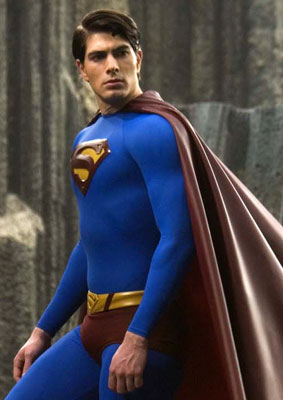
I'll start by saying I think they definitely made the right casting choice with Brandon Routh. He really surprised me - he managed to inhabit the big shoes left by Chris Reeve and add his own touches as well. So he kept the right "feel" to maintan continutiy with the earlier franchise, but brought his own dignity and goofiness to the Superman/Clark Kent personae. Plus he looks great in the suit. Better than Reeve did (or George Reeves, for that matter).

However, in terms of the story, this felt very much like Superman I - meaning that the character depth and story were pretty flat all around. Worse, many of the "gee whiz" aspects of the story were reminiscent of Superman III (and the never to be mentioned fourth installment). There were lots of plot gaps, and Lex Luthor still comes of as a farce - even with Kevin Spacey in the role. Really. This is the arch enemy of Superman? Hardly.

At nearly two and a half hours, it amazed me that so little was actually said, and so many huge plot holes were left gaping (and some pretty deep messing with the mythology. Supes is basically an absentee father [??!?!] in this installment. He and Lois have apparently had intimate relations, and a relationship [which is not a problem - that has precedent], but when they meet again on the roof of the daily planet, it is as stiff and formal as a tax audit. Weird.)

So, the sad thing is, it's trying really hard to be Spider Man 2, and failing. It should have aspired to Superman II instead.

(and I'm not even going to get into the goldmine of character development, nuance, and mythology they basically tossed away by choosing to ignore the entirety of the last five seasons of Smallville. Really. In light of that whole corpus, the thought of playing Lex Luthor for laughs is just ludicrous. Finally we might get to see him for the scary and tyrannical mastermind he is, with an actor the calibre of Kevin Spacey, no less, and they go trying to make him a bad Gene Hackman copy [and even Gene Hackman should have been allowed to play the role much darker, and could have brilliantly. In both cases, I blame the directors]. Luther's 'master plans' come across as poorly executed science projects. What the HELL people?)

It is sad to say that, with so many years and such good mythology to work from, the earliest Superman movies are still the best Superman movies. On the balance, though, I'll still stick with Smallville. Somebody over in Vancouver seems to be paying attention to the important stuff.

If they decide to make yet another Superman movie, holding on to Brandon Routh and scrapping the screenwriters and perhaps also (though I'm sad to say it, given his excellent work on the X-Men films) Bryan Singer, I'll probably go see it, because that's the kind of guy I am. But my confidence in this franchise is shaken. I'll admit it.

I've still got my DVD box sets and the comic books and old radio shows, though. And yeah, you'll still see me in those t-shirts.