Dear Senator Alexander,
As I have several times before, I am writing you as a citizen and small business owner firmly in favor of the present health care reforms. I support the Patient Protection and Affordable Care act recently made into law by Congress, and support continued efforts on the part of concerned citizens and legislators to improve the law until it contains a government-supported, single-payer option.
I am therefore writing you to urge you, in the strongest possible terms, to please cease all efforts to undermine or repeal PPAC. Furthermore, I am asking you to work to continue the momentum begun by the passage of the Act into law. This health care legislation is not perfect, granted, but it is an essential and necessary start. Too many Tennesseans face dire consequences if the law is repealed or if the enactment of its reforms are delayed. Please, for their sakes and for mine, change your position and stand in full support of the Patient Protective and Affordable Care Act!
Your recent vocal efforts in the Senate to spearhead the repeal effort take us backward, not forward. It is the wrong battle, waged against the wrong enemy. Speaking as one of the working poor, as a person scraping every day to make a business work in this economy, we are not the problem. We need Washington to give us support and increased safety nets like the Health Care law, not take threaten to take them away!
I realize we deeply disagree on this issue. Therefore I am hopeful that, if nothing else, I can appeal to your conscience on this matter. I am a Christian, and Scripture clearly states we must protect the least of these among us. When we do so, we honor our Creator. I hope, even if we disagree on much else, we can firmly agree on this point.
At a time when so many dire issues face our nation, I hope you will lead your colleagues in the Senate, as you have so many times in the past, to a higher ground of conversation than I have seen these past two weeks. Now is *not* the time to attach anti-Health Care amendments to each new bill. Now is *not* the time to fixate on repealing Health Care as some sort of "mandate" from the recent election. Now is the time to help the economy by moving forward, not dwelling in the past.
Thank you for your service to the state of Tennessee, and please know that I speak for a great many Tennesseans when I say that I support the Health Care law, and that repeal is not the answer.
Cordially,
David Dault
Showing posts with label family. Show all posts
Showing posts with label family. Show all posts
01 February 2011


Dear Senator Corker, Please Support the Health Care Law
Dear Senator Corker,
As I have several times before, I am writing you as a citizen and small business owner firmly in favor of the present health care reforms. I support the Patient Protection and Affordable Care act recently made into law by Congress, and support continued efforts on the part of concerned citizens and legislators to improve the law until it contains a government-supported, single-payer option.
I am therefore writing you to urge you, in the strongest possible terms, to please cease all efforts to undermine or repeal PPAC. Furthermore, I am asking you to work to continue the momentum begun by the passage of the Act into law. This health care legislation is not perfect, granted, but it is an essential and necessary start. Too many Tennesseans face dire consequences if the law is repealed or if the enactment of its reforms are delayed. Please, for their sakes and for mine, change your position and stand in full support of the Patient Protective and Affordable Care Act!
Mr. Corker, two summers ago you and I spoke face to face at a town hall meeting. At that time you watched as angry voices heckled me because I asked you to help me and my pregnant wife by voting in favor of health care. That evening, you looked me in the eye and I had the feeling you were ashamed at what your constituents were shouting at me. Like me, I hope you feel we are better than that in this state.
Therefore I am hopeful that I can appeal to your conscience on this matter. I am a Christian, and Scripture clearly states we must protect the least of these among us. When we do so, we honor our Creator. I hope, even if we disagree on much else, we can firmly agree on this point.
At a time when so many dire issues face our nation, I hope you will lead your colleagues in the Senate, as you have so many times in the past, to a higher ground of conversation than I have seen these past two weeks. Now is *not* the time to attach anti-Health Care amendments to each new bill. Now is *not* the time to fixate on repealing Health Care as some sort of "mandate" from the recent election. Now is the time to help the economy by moving forward, not dwelling in the past.
Thank you for your service to the state of Tennessee, and please know that I speak for a great many Tennesseans when I say that I support the Health Care law, and that repeal is not the answer.
Cordially,
David Dault
As I have several times before, I am writing you as a citizen and small business owner firmly in favor of the present health care reforms. I support the Patient Protection and Affordable Care act recently made into law by Congress, and support continued efforts on the part of concerned citizens and legislators to improve the law until it contains a government-supported, single-payer option.
I am therefore writing you to urge you, in the strongest possible terms, to please cease all efforts to undermine or repeal PPAC. Furthermore, I am asking you to work to continue the momentum begun by the passage of the Act into law. This health care legislation is not perfect, granted, but it is an essential and necessary start. Too many Tennesseans face dire consequences if the law is repealed or if the enactment of its reforms are delayed. Please, for their sakes and for mine, change your position and stand in full support of the Patient Protective and Affordable Care Act!
Mr. Corker, two summers ago you and I spoke face to face at a town hall meeting. At that time you watched as angry voices heckled me because I asked you to help me and my pregnant wife by voting in favor of health care. That evening, you looked me in the eye and I had the feeling you were ashamed at what your constituents were shouting at me. Like me, I hope you feel we are better than that in this state.
Therefore I am hopeful that I can appeal to your conscience on this matter. I am a Christian, and Scripture clearly states we must protect the least of these among us. When we do so, we honor our Creator. I hope, even if we disagree on much else, we can firmly agree on this point.
At a time when so many dire issues face our nation, I hope you will lead your colleagues in the Senate, as you have so many times in the past, to a higher ground of conversation than I have seen these past two weeks. Now is *not* the time to attach anti-Health Care amendments to each new bill. Now is *not* the time to fixate on repealing Health Care as some sort of "mandate" from the recent election. Now is the time to help the economy by moving forward, not dwelling in the past.
Thank you for your service to the state of Tennessee, and please know that I speak for a great many Tennesseans when I say that I support the Health Care law, and that repeal is not the answer.
Cordially,
David Dault
15 January 2011
Love and Loss in a Digital Age
Gmail is eerie to me these days. I still use it, but it has a haunted aspect.
A little over two years ago, my mother passed away. Despite this fact, her presence remains as a ghostly part of my gmail account. When I mouse over her name in my contacts list, a stylized picture of her face appears, hovering, until the mouse moves away. I have archived emails and voicemails the linger, despite her absence from this world. She still has a toe hold here. She remains, though departed.
I am thinking about that today. Today my friends buried a friend of mine. She passed away a little over a week ago, and the funeral was today. Thirty-six years old. Too young. I couldn't be at the funeral. It is eight hours by car, and my wife and daughter are both sick in bed. And yet, here on Facebook, I am connected to the events. I have managed to get a status update or two throughout the afternoon. It breaks my heart that I could not be there. I wanted to be. But the sting is lessened, somewhat, by these odd electrical connections.
And here, in various places, I have her emails and messages to me. I have inklings of places where she and I were connected randomly -- she quotes a lyric from one of my songs here, we have a mutual friend there. None of it adds up to the weight of her absence, but the weight nonetheless is palpable. Substantial. Like my mother, my friend Elizabeth still has a toe hold in this world.
For the last twenty years or more I have kept some records of things. Projects I have been a part of that make me proud. The files they kept on me from grade school and high school (yes. I have them). My poetry, such as it is, and my writings (even the bad ones). Pictures. Old cassette tapes. Every rejection letter from every school and job I ever applied to. I have these things.
Why? Because I want, to whatever degree possible, to leave a breadcrumb trail when I am gone. I want to have pieces that others can piece together. It won't add up to my life, I know, and the life it adds up to will probably only be a parody of the one I lived, a shadow play. But dumb show or not, I want to leave the breadcrumbs and have them be found. I want to leave a toe in this world.
When we were cleaning out my mother's house, there was so little time. So much got passed over, and thrown away, or lost. If she intended tidy endings and well-kept meanings for me, I missed them in the maelstrom. I have had to make my own meanings. So will you. Meanings are for the living, not the dead. No matter how much I would like to control my meaning when I am gone, the best any of us get is the phantom face during a mouse-over.
It is all there is. It is enough.
And so I say goodbye again to my dear, strange mother, as I do every time my mouse glances near her name and that face appears. And I say goodbye today to Elizabeth, though I am certain my goodbyes will echo again and again as I bump into her toe holds here in my digital world. Goodbye. I have loved you as best I could, and I love you still, in my own strange and halting ways. Please pray for me as I pray for you. I hope we meet again -- not as a mouse over, but, as promised, face to face.
I love. I miss. I hope.
A little over two years ago, my mother passed away. Despite this fact, her presence remains as a ghostly part of my gmail account. When I mouse over her name in my contacts list, a stylized picture of
 her face appears, hovering, until the mouse moves away. I have archived emails and voicemails the linger, despite her absence from this world. She still has a toe hold here. She remains, though departed.
I am thinking about that today. Today my friends buried a friend of mine. She passed away a little over a week ago, and the funeral was today. Thirty-six years old. Too young. I couldn't be at the funeral. It is eight hours by car, and my wife and daughter are both sick in bed. And yet, here on Facebook, I am connected to the events. I have managed to get a status update or two throughout the afternoon. It breaks my heart that I could not be there. I wanted to be. But the sting is lessened, somewhat, by these odd electrical connections.
And here, in various places, I have her emails and messages to me. I have inklings of places where she and I were connected randomly -- she quotes a lyric from one of my songs here, we have a mutual friend there. None of it adds up to the weight of her absence, but the weight nonetheless is palpable. Substantial. Like my mother, my friend Elizabeth still has a toe hold in this world.
For the last twenty years or more I have kept some records of things. Projects I have been a part of that make me proud. The files they kept on me from grade school and high school (yes. I have them). My poetry, such as it is, and my writings (even the bad ones). Pictures. Old cassette tapes. Every rejection letter from every school and job I ever applied to. I have these things.
Why? Because I want, to whatever degree possible, to leave a breadcrumb trail when I am gone. I want to have pieces that others can piece together. It won't add up to my life, I know, and the life it adds up to will probably only be a parody of the one I lived, a shadow play. But dumb show or not, I want to leave the breadcrumbs and have them be found. I want to leave a toe in this world.
When we were cleaning out my mother's house, there was so little time. So much got passed over, and thrown away, or lost. If she intended tidy endings and well-kept meanings for me, I missed them in the maelstrom. I have had to make my own meanings. So will you. Meanings are for the living, not the dead. No matter how much I would like to control my meaning when I am gone, the best any of us get is the phantom face during a mouse-over.
It is all there is. It is enough.
And so I say goodbye again to my dear, strange mother, as I do every time my mouse glances near her name and that face appears. And I say goodbye today to Elizabeth, though I am certain my goodbyes will echo again and again as I bump into her toe holds here in my digital world. Goodbye. I have loved you as best I could, and I love you still, in my own strange and halting ways. Please pray for me as I pray for you. I hope we meet again -- not as a mouse over, but, as promised, face to face.
I love. I miss. I hope.
11 June 2010
Trusting the Ground Crew
As far as my phobias go, I would have to say "fear of heights" probably ranks as number three.
Do not be fooled by this into thinking that it is a mild fear. It is not. Let me give you a quick story to illustrate the point.
Once upon a time (actually, around fifteen years ago), while I was working for the North Carolina Outward Bound School, I found myself sitting on a platform near the top of the tree line in the Pisgah national forest. I was about 60 feet in the air, about to depart from the last element of the "ropes course" there in the woods.
If you have never had the pleasure of a ropes course, let me describe it. Imagine a skeletal fortress of telephone poles and guy wires that towers above you, standing on the ground. Then imagine someone points at this flimsy bastion of questionable architecture and says, "Climb that." The only way through is up, and the only way off is, well...
...That's usually a surprise they don't mention when you're there on the ground. I have been on a lot of ropes courses in my life (particularly when I was working for Outward Bound), and the last element is always pretty dramatic. You never just climb down off a ropes course, like you would expect a civilized person would. No. You have to make one last stab at conquering fears and team building and trust and all that. Which means that it's usually going to involve some sort of leap into the abyss.
By that point in my career as an outdoor adventurer, I was expecting the standard mode of ropes course egress: the zip line. But sitting on that platform that morning, there was no zip line. No. I was strapped in and harnessed to what basically amounted to a long pendulum wire. In other words, to get off this particular ropes course, I was going to have to fall off the small platform upon which I was sitting, free-fall in air until the guy wire I was strapped to pulled taut, and then swing back and forth until my momentum slacked enough that somebody could climb a ladder to catch hold of my foot and help me down.
My palms are sweating just writing this, by the way.
It took me a long time to move my butt off that platform. That, however, is not my evidence for my fear of heights. No. That evidence came later in the trip.
One of the guides with the crew I was with that trip was an Australian named Bruce (I'm not kidding). He had been leading a different activity that morning, so I hadn't seen him most of the day. The next morning he and I were together at the rock climbing site, and he asked me, "Were you on the ropes course yesterday?"
Yeah, I answered. But why was he asking?
"I was leading a hike up the mountain yesterday," he said, laughing, "and we heard you screaming."
* * *
Given that I am terrified to be more than a few feet off the ground (really, even stepladders can prove to be a challenge), you might well ask, how the heck was I able to get up onto that ropes course in the first place?
Ah. To explain that, I will have to tell you about "ground school."
A ropes course, like many other outdoor activities like rock climbing and rappelling, is a technical activity that involves a series of calculated risks offset by the implementation of safety equipment. In the case of a high-elements ropes course, that equipment includes a Swiss seat, a redundant pair of high-load bearing locking carabiners, a lot of nylon rope (referred to as "webbing"), and a crash helmet.
Participants would suit up in all of this gear, and then our leaders walked us over to a clearing about fifty feet away from the ropes course. There, on the ground, was a horizontal telephone pole, sitting just a few inches off the ground, with a horizontal guy wire stretched about five or six feet above it.
This was ground school. The crew had each of us, in turn, get up on the pole and lock ourselves onto the guy wire with the two carabiners. The carabiners, in turn, were attached, via short lengths of nylon webbing, to the Swiss seats at our waists. Once we were locked in, the leaders just had us walk, back and forth, along the length of the pole. Simple enough.
Then, right as a little boredom was starting to set in, a new instruction was given: "OK," the leader said," Fall."
Huh?
"Fall."
The task, basically, was to lose your balance and fall off the pole. Now, I don't know about you, but falling is not comfortable for me. My body resisted. It wanted to balance. It took work to fall off the pole. Then, just as I was getting used to the discomfort of falling, a revelation.
The webbing snapped taut, and the harness at my waist caught me. I was no longer falling; I was hanging. I was hanging in mid-air, and not altogether uncomfortably. I looked around. This seemed solid. I felt safe.
A few more minutes on the pole, and several more falls, confirmed again and again that the equipment could be trusted. It would catch me and hold me, even if I lost my balance. With each fall, my confidence in the process -- and my confidence in myself -- increased a little bit. By the time I got off the pole, I was still afraid of heights, but my body was slowly convinced that the equipment I was in was stronger than the danger I feared.
* * *
Bruce took some obvious pleasure in teasing me about my terror. Despite this, I can honestly say that -- except for that last part, swinging and freefalling in the unforgiving sky -- I was not overly uncomfortable with my time on the ropes course. By "not overly uncomfortable," I mean that I was actually able to function and not freeze in abject fear. Given my experiences of other high places (suspension bridges, theater catwalks, Rock City), this was quite an accomplishment -- for all parties concerned.
I remember the theater catwalk particularly vividly. I was in college, working backstage at the campus theater for my freshman-year work study. Most of my job had been sawing wood, hammering together sets, and painting (and painting, and painting). But one day, the boss wanted me to go up into the ceiling and rig lights. So I climbed up a set of stairs, through a cubby hole, shimmied past the pipes of a pipe organ, and climbed a long and somewhat precariously balanced stepladder. Reaching the top, I had to crawl through another hole, where someone had sawed through the wall up near the ceiling, and onto the catwalk.
If you have never been on a catwalk, don't. Just don't. You're some fifty feet in the air, and you are standing on a narrow plank of thin and (as I recall) queasily-flexible plywood. To my right, on the stage side, there was a metal bar that the lights were screwed on to. To my left, there was one steel cable. You couldn't stand all the way up.
So there I was, high in the air, with -- as far as I could tell -- absolutely nothing to keep me from falling to my death.
I froze. I froze solid. I remember the boss cussed a blue streak at me for freezing, but I froze. I might have timidly adjusted the light closest to me. I might have been able to move just enough to get to one more, but that was it. Utterly useless.
* * *
You might well ask what allowed for the difference between that frozen state on the catwalk and my relative success, years later, on the Pisgah ropes course. What was the secret to not freezing?
Simple enough to answer. The difference is trust. Sad to say, but I certainly did not trust my boss at the theater job to look out for the well being of my life and limb. In contrast, at the ropes course, that time spent on that pole a few inches off the ground accomplished two essential and profound things in my psyche that morning before I scaled up to the treetops.
First, it caused me to get comfortable with the equipment, and with how the equipment would protect me. That unexpected command, "Fall," and the feeling of being securely caught again and again when I fell, helped me trust the harnesses and carabiners and webbing holding me in place.
Second, and more importantly, these moments of growing confidence in the equipment increased my confidence, with each fall, in the folks who had put the equipment on me in the first place. It's hard to describe accurately -- maybe it was a strange equivalent of what they call "Stockholm Syndrome," where kidnap victims begin to empathize with their captors -- but I felt a bond with the leaders grow almost in an instant that was very strong. I knew I was going to be safe because I trusted that these folks were looking out for me.
I trusted my ground crew.
* * *
The goal of all the activities in Outward Bound, of course, is not simply to get people into the outdoors. If you only looked casually, though, that's exactly what you would see. But as you examine the pedagogical philosophy more closely, you begin to see that what happens on an Outward Bound trip in the woods could just as easily occur in the heart of a city. The secret goal of Outward Bound is not wilderness adventure. It is risk.
"Risk" is almost a dirty word these days. We insure ourselves and shield ourselves to avoid it at all costs. In contemporary living, "risk" equates with "danger." It is this vicious pairing that the pedagogy of Outward Bound seeks to uncouple. Many of us -- most of us -- surround ourselves with a zone of comfort and safety. Anything beyond this zone is, by the logic of our comfort, "dangerous." Think, for example, of all the books on public speaking that report (perhaps apocryphally, perhaps not), that a majority of Americans surveyed "would rather die than give speech."
That's a great example of this collapse of "risk" into "danger." To give a speech creates anxiety because there is the risk one will be embarrassed. But embarrassment won't cause you physical harm. Death, on the other hand, is just about the textbook definition of "physically harmful." The two aren't the same. In our modern cocoons of air-conditioning and antacids, however, we are quite likely to forget that.
On that catwalk in the theater you might suggest I was in actual danger, and I would not argue with you. That was a moment when my fear, perhaps, served me and my survival well.
At the ropes course, however, as I was told again, "Fall," and I fell and was caught, my body began to learn (slowly) that -- though this felt like danger -- I was not in danger. I was safe.
It is this zone, where you feel the danger but you are not actually in danger, that the pedagogy of Outward Bound is designed to explore. When you learn to function in this zone, you begin to discern the difference between your brain screaming at you that you are in danger and actually dangerous conditions. Facing the zone of risk, people begin to find in themselves reserves of strength and fortitude they had not previously suspected would exist. If that sounds idealistic, it should. It is hella idealistic, and I do not make apologies for that, because I've seen (and felt in my own bones) that it works.
The ability to function in risk, however, is not as simple as making a decision or mouthing pious words. It has to start deep within a person, as the soul learns, inscrutably and by mysterious increments, to trust that, in falling, the harness will hold.
* * *
It was about two in the morning when she awakened me. It was passing from Saturday to Sunday, and it was the dead of January and it was so very cold in Memphis. We were bundled up under the covers and had been sleeping well enough when, groggy, I figured out that she was telling me -- again, because I must have been asleep the first time around -- that she thinks her water just broke.
We had planned for this, sort of. We knew that this was just the beginning, and that there was still a long way to go. And it was two in the morning. And suddenly we were shit-sure wide awake and excited, and also trying to convince each other that we needed to go back to sleep; that we needed our rest for all that was ahead.
We turned on the little portable DVD player by the bed. Put on an episode of The Office to distract us with a little laughter. Snuggle back in again against the cold. Try to get a little sleep.
* * *
While the expectations in the Catholic Church are firm about attending weekly Mass, there are also generous loopholes for times of distress or concerns for health. Though I don't know that I have ever seen it mentioned explicitly in the Catechism, we took the liberty the next morning of skipping church on account of the fact that Kira was now on the near edge of labor. Every now and -- ouch! -- again there was a contraction. We thought they were big. We timed them, and then began timing the intervals between. But for the most part, we just had a nice morning and relaxed.
There was another episode of The Office to take our mind off things, and then we went for a walk into Cooper-Young and had lunch at the Deli. I forget whether we split a sandwich, or whether we each had one of our own. I do remember, though, that we were laughing about what we might say if one of the wait staff or another patron asked us (as had happened so often since Kira started to show), "When are you due?"
"Um...NOW!" we kept giggling.
* * *
Mrs. Whatsit, Mrs. Who, and Mrs. Which are, of course, the three mysterious women who arrive to aid Meg and Charles Wallace in the intergalactic and inter-dimensional search for their father -- the conceit that drives the narrative of Madeleine L'Engle's A Wrinkle in Time.
Wrinkle entered my life through one of those Scholastic order forms in elementary school, where you can sign up to get Newberry and Caldecott winners on the cheap. Moreover, Wrinkle entered my life at a point when I was young enough that my parents were still together. Maybe it was second grade -- that feels about right.
Regardless of the exact details, though, I think I can safely credit A Wrinkle in Time for prompting me to be somewhat overly well-disposed towards a trio of crazy women who swoop into your house at all hours, coming to aid in the transportation to strange new worlds and mysterious new realms. In other words, you can thank the Scholastic Book Service for this ease I have when I meet three crazy women on a holy mission.
Needless to say, the first time I met the Full Circle Midwives -- Martina, Melissa and Missy -- I couldn't help but think, "Aha: Which, Whatsit and Who." They were quite a team: a German expat, a crunchy Earth-mama type, and a doula -- each with well over a decade (or two) of experience.
Midwifery practices are few and far between in this part of Tennessee, but as we compared the options available we knew we were very pleased with what we saw. From the first weeks we had been in Memphis, mid-way into Kira's pregnancy, we had been under their watchful care. They had conducted examinations of Kira and had given us access to numerous (and at times overwhelmingly explicit) videos and resources, as well as simply reassuring us and letting us know that we were not in this alone.
* * *
Martina came to the house once in the afternoon and twice later in the evening that Sunday.
Kira and I were, by turns, going on walks around the block and relaxing (as much as possible) back at home. We had rearranged the downstairs a couple of weeks before. Now, with the dining room table pushed to one side, we had cleared a large space for the futon mattress and all the supplies we had been told to gather. When Martina arrived she added to our stash of supplies, bringing along an oxygen tank and a couple of medium-sized duffel bags full of medical and midwifery stuff.
With each visit that day she only stayed a little while. She checked Kira's progress, and made sure everything was normal (it was), and offered praise and encouragement and helpful suggestions on how to get rest. For the most part, however, she exuded a steady calm that was very reassuring, if for no other reason than that, for us, "calm" was periodically in short supply.
By the time Martina left after her late-evening visit, Kira's contractions, which we thought were big at the start of the day, had become much bigger. In fact, at points, they were huge. The night became a groggy ballet for the two of us, as we alternated brief periods of sleep with Kira moaning and me massaging her lower back. But we did manage to sleep, there on that futon mattress on the floor. As before, The Office helped.
* * *
That Monday morning I awoke, and Kira was already up. At this point, she had been in labor for just around thirty hours. It was a good thing we were doing this at home (doctors tend to get impatient, I have heard, if labor goes on and on).
We were still timing the contractions, and noting the time between. They were -- how to say this? -- regularly irregular. Kira would call out, "Starting," and I would count Mississippis to myself until she indicated that she was finished. At some point, we graduated to a timer on a webpage that would count the times and intervals for us. We showered, puttered, and timed, spending most of the morning trying still to rest and relax. We made it through a good chunk of that Office season box set.
I was useful, though. When a contraction would hit, Kira found it comfortable to sort of wrap her arms around my neck and hang down against me, rocking softly back and forth. I got good at being a steady weight that she could moan against. I'll be honest -- I really liked this part. It made me feel not quite so on the outside of it all. I was part of the team, even if I wasn't the one swinging for the fence, like Kira was.
* * *
A Swiss seat is an odd contraption. The first time you pull one on, it doesn't fit you quite like you expect. You're used to belts that cinch tight around the waist, above the hips. A Swiss seat isn't like that. It grabs you around the thighs, mostly. Then, when you start getting into a weight-bearing situation, the harness pulls tight across your butt. The "seat" part is no mistake -- this thing is designed for you to sit in, not to keep your pants up.
The first time I ever got into one I was up repairing a roof in Sewanee, my old college burgh. It was a house down near the town market, as I recall, and we had gotten a bunch of students out that morning to help fix up the place. It was a student organization kind of like Habitat for Humanity (I think now they might even be a Habitat chapter), and I was one of the lucky ones who drew the short straw. The height bothered me, but as long as I stayed pretty far from the edge, the large flat surface of the roof kept my in the range of sanity. We used Swiss seats and long ropes that we borrowed from the wilderness program to make sure us undergrads didn't go cracking our skulls open in the midst of our good deed.
What I liked about the Swiss seat best, of course, was this: as you leaned into it, it tightened. The more you needed it to hold you, the more secure it felt.
* * *
Martina arrived around noon, and immediately started brewing an extraordinarily strong pot of raspberry leaf tea. Then she examined Kira again, and I showed her our dutiful log of contractions.
It's actually pretty funny. When you watch births portrayed on television and the movies, there's all this rushing and hectic energy. "Push! ... Push! ... PUSH!..." and suddenly you hear the telltale "Waaaaaaaaaa" and there are smiles of relief and everybody can't believe they did it and such. Time an on-screen birth sometime. From onset of labor to final "PUSH!" I will bet you that it occurs in under three minutes.
Ladies and gentlemen, I am here to tell you, as one for whom the televised versions of birth were my sole training in the process before all of this began, real human births ain't fast like that.
Which is all to say, they also make it seem, in those movies and shows, that the timing of contractions is vital information, and that the contractions escalate like some sort of mad logarithmic freight train, doubling and doubling like Moore's law applied as much to wetware as it does hardware.
I was disabused of this fiction with Martina's perfunctory, "Hmph. Okay," as I showed her the timetables. Then she went back to tending to my wife. And I realized that, though the contraction timing may not have been anything close to vital information, it did give Kira and me something to hold on to, and something to do, that kept our minds away from panic until the real work needed to begin.
But now things actually were progressing, slowly, and the real work needed to begin.
* * *
The really extraordinarily strong pot of raspberry leaf tea, I learned, helps to spur the mother's body on to stronger and more regular contractions. It's a bit of midwifery wisdom that keeps at bay the need for drug interventions like Pitocin.
While we were waiting for the pot to brew, the three of us went for a walk around the neighborhood. Actually, I'm being generous. We actually just took a walk around the corner and to the end of the street. This is a distance that, under more usual conditions, would take Kira and I just a few moments to cross. On this walk, however, Martina and I took turns as Kira, every few steps, stopped and labored through another growing contraction. Sometimes she would hang onto my neck, or lean down against Martina.
I imagine we were an odd-looking trio, moving slowly down the street and stopping with a moaning woman doubled-over again and again. Like at the Deli the day before, we laughed thinking how we would explain ourselves if someone were to come out of their house and want to know what was going on. "Don't worry, we're fine...She's just having a baby..."
* * *
Martina's approach was nurturing and encouragement all the way. When she praised me for how well I was supporting Kira through this part of the labor, I felt like a million bucks. For a few hours, the three of us were a solid team, with she and I taking turns supporting Kira through the contractions. During this time, it really felt like Kira's body was the one in control, and anything that it did -- whether fast or slow -- was just fine.
But Martina had to leave to attend to some family obligations around 3:30 (though she was reluctant to leave us at that point), and so, with Kira now quite full of raspberry leaf tea and me continuing my role as human monkey bars for her to hang on during the painful moments, she said goodbye for now. Not to worry, though. Help was on the way.
At quarter to four, Melissa arrived. Help was here.
Now let me say this. If you would have just shown all this to me on paper, I would have been sure that, of the two, the earth-mama type (Melissa) would have taken the laid-back, "everything your body does is good" approach and the German (Martina) would have been the third-base coach. Shows you what I know.
As soon as she got situated, Melissa got us working to help that baby get ready to come out. Kira was up, switching positions, rocking hips and bouncing on the big exercise ball or laying on her side. As before, I was switching with her, being there when she needed to lean and massaging her lower back.
I felt a lot less essential to the process, but I understood why. Kira's contractions were shifting. They had been intense before, but she had been at this for so long that she risked exhaustion, and there was more intensity yet to come. If Martina's approach had been like someone coaxing a deer from the edge of a forest, Martina was breaking a wild bronco. Kira's body was still in control, but it didn't necessarily know the best direction to run. Melissa had every good reason to be stern in her approach.
It worked, too. About 4:30, Missy (the doula) arrived, and by that point contractions and dilation were steadily progressing. Nothing was rapid. In fact, Kira was feeling it was too slow, and worrying she'd have to transfer to the hospital. I remembered (from all the videos the midwives had given us to watch) that a lot of moms feel that way in labor right before things really shift into high gear -- so I encouraged her and reminded her of that. She was amazing, and rallied around that thought and hung in there.
Missy and Melissa were the team now. I felt the "woman energy" in the room rising markedly, even as my own energy was dwindling. Amazingly (to me, at least), Martina had predicted this, and left instructions with Missy to look out for me. So at five o'clock she sent me upstairs with a sandwich and suggested I nap, if possible.
* * *
We were out in the Pisgah forest for about five days, and on the next to last night the leaders gave each of us a tarp and sent us off by ourselves to make a camp and shelter ourselves with nothing but the materials we had immediately at hand. So I found a good, low tree with cooperative branches and fixed up the tarp with my shoelaces and (since I had a ponytail at the time) some of the elastic bands I had brought along to tie my hair back.
That time alone that evening was profound. I remember I spent a long time brushing the tangles out of my hair, and listening to the sounds of the woods. When you go on an Outward Bound trek, part of the gear you bring along is a book of inspirational readings that they have bound up in a pocket-sized folio with some blank pages for your own thoughts and reflections. I read a while, and then I wrote a while, and, strangely, I found myself crying for a while. Today I could not for the life of me tell you what those tears were about. Exhaustion? Alone-ness? Beauty? I don't know. But I cried. That's for sure.
Dusk came, and as the daylight fell away, I felt my body become heavy and sleep came easily as the sun disappeared. I remember this was the first time I had ever felt that sort of slippage into slumber. I am so used to electric lights and fighting the dark that I was surprised to find how naturally my body tuned itself into the circadian rhythm. It remembered something I did not; my body knew how to do this better than I did.
Most of my life, thinking I was the one in control, I had really just been getting in its way.
* * *
My eyes were open at seven sharp.
I was disoriented for a moment, and heard voices downstairs. I found out later that, at almost that same time, Kira had gone into what they call "transition," the final stage of labor. The baby drops into position in the pelvic girdle, and that's when all the muscles shift from stretching open to pushing the baby down and out.
I have been told that mothers often make a very peculiar moan as this occurs. I do not know if I heard the moan, or if that was what caused me to wake. I do know, however, that Melissa heard it, and shifted into action.
During my nap, Martina had returned, and as I came downstairs I beheld for the first time the three of them together. Mrs. Which, Mrs. Whatsit and Mrs. Who had descended on our home in this cold and windy night, and magic was afoot. Time was wrinkling. Dimensions were shifting. Without knowing the mode of transport, we were arriving on a strange new planet, a new world.
* * *
It was hard not to feel like an outsider, like I had missed something important. The woman energy was in full swing, and I had none of it to offer. Groggy, I fretted over this, but almost at the same moment, I was put back to work. I was rested; Kira needed my strength now.
She tells me she remembers almost nothing of that last hour. In the moments between the stabs of pain, she would black out. When she did manage to remain awake for a few minutes, Missy or Martina made sure she took a bite of some food to keep her energy up. Meanwhile, Melissa was there, in the "catcher" position, keeping track of the progress.
I was shifted in behind her, and she leaned into me again. As much as I could be, I was with her. I wanted, prayed, that I could absorb her pain through my skin and away from her.
As we had those many months before, our bodies found a rhythm. Holding on to her, we rode the storm together.
* * *
At 8:04, the telephone rang. The next day I checked the message. It had been my father, calling for an update.
* * *
What caused those tears, that evening in the forest? I wish I knew. It was so many years ago.
But I remember how lost I felt at that point in my life. I was in my mid-twenties, and -- though I was careening ahead into life and debt and decisions and age -- I had no discernible direction. I was a trajectory without a bearing, without a compass. I felt good for nothing and nobody, least of all myself. If I were to bet, something of that was wrapped up in those tears, that evening in the forest.
What had changed, in all those years since? Had enough changed?
* * *
"Do you want to reach down and feel the top of your baby's head, Kira?"
"Oh my God. Oh my God."
* * *
After all the waiting, after forty-two hours of labor, the final distance closed so quickly.
I think it surprised Kira most of all, suddenly to be holding our child, but I can't say I was any more prepared for that little pink face suddenly so close to mine. We forgot to ask what it was at first. All that mattered was that a moment ago we had been alone in the world together, and now we were shared. Healthy and pink and breathing, a new story for the world.
No longer a "Kritter." Maggie. Beautiful pink Maggie.
* * *
Midwives are shamans. They are field medics. They are crones and anchors. When my wife was hungry, they fed her. When, after the labor was done, she was bleeding from the effort of that last instant of distance, they mended her wounds with salve and suture.
As I held Maggie for the first time, they washed dishes and laundry. The house was returned to normalcy with a humble and efficient speed. The triumph was Kira's, not theirs. They were there to accompany and to serve, to encourage and to guide.
What physician, tell me, would have done this?
The triumph was Kira's, and now she rested, cared for by a trio of three mysterious women -- Mrs. Whatsit, Mrs. Who and Mrs. Which.
* * *
There's still a chill in the air, and a bit of morning mist. My skin is tingling from the bite of November, but I'm not cold. I feel good.
One step at a time. I unclip the caribiner from the hook sunk in the wood, and stretch my arm above my head until I can lock it in place on the guy wire above. Once it's secure, I'm linked both to the pole I'm coming from and to the pole I'm moving to. Redundancy.
I hitch my leg a bit and shift my weight, and then I'm swinging up. Once my feet are solid, I reach down and unhook the second caribiner and lift it above my head to the other guy wire. Once it's in place, I dial my fingers across them both to lock them tight. As I come out of the stretch, I feel the Swiss seat tightening a bit across my backside.
I look up. I'm above the treetops now. The autumn patches of yellows and red dot the forest into the distance up the mountain. Turning the other direction, I lean out, and the harness catches me as I hang out from the pole, secure.
The sun has risen high enough now to have burned off the morning haze.
I can see for miles.
Do not be fooled by this into thinking that it is a mild fear. It is not. Let me give you a quick story to illustrate the point.
Once upon a time (actually, around fifteen years ago), while I was working for the North Carolina Outward Bound School, I found myself sitting on a platform near the top of the tree line in the Pisgah national forest. I was about 60 feet in the air, about to depart from the last element of the "ropes course" there in the woods.
If you have never had the pleasure of a ropes course, let me describe it. Imagine a skeletal fortress of telephone poles and guy wires that towers above you, standing on the ground. Then imagine someone points at this flimsy bastion of questionable architecture and says, "Climb that." The only way through is up, and the only way off is, well...
...That's usually a surprise they don't mention when you're there on the ground. I have been on a lot of ropes courses in my life (particularly when I was working for Outward Bound), and the last element is always pretty dramatic. You never just climb down off a ropes course, like you would expect a civilized person would. No. You have to make one last stab at conquering fears and team building and trust and all that. Which means that it's usually going to involve some sort of leap into the abyss.
By that point in my career as an outdoor adventurer, I was expecting the standard mode of ropes course egress: the zip line. But sitting on that platform that morning, there was no zip line. No. I was strapped in and harnessed to what basically amounted to a long pendulum wire. In other words, to get off this particular ropes course, I was going to have to fall off the small platform upon which I was sitting, free-fall in air until the guy wire I was strapped to pulled taut, and then swing back and forth until my momentum slacked enough that somebody could climb a ladder to catch hold of my foot and help me down.
My palms are sweating just writing this, by the way.
It took me a long time to move my butt off that platform. That, however, is not my evidence for my fear of heights. No. That evidence came later in the trip.
One of the guides with the crew I was with that trip was an Australian named Bruce (I'm not kidding). He had been leading a different activity that morning, so I hadn't seen him most of the day. The next morning he and I were together at the rock climbing site, and he asked me, "Were you on the ropes course yesterday?"
Yeah, I answered. But why was he asking?
"I was leading a hike up the mountain yesterday," he said, laughing, "and we heard you screaming."
* * *
Given that I am terrified to be more than a few feet off the ground (really, even stepladders can prove to be a challenge), you might well ask, how the heck was I able to get up onto that ropes course in the first place?
Ah. To explain that, I will have to tell you about "ground school."
A ropes course, like many other outdoor activities like rock climbing and rappelling, is a technical activity that involves a series of calculated risks offset by the implementation of safety equipment. In the case of a high-elements ropes course, that equipment includes a Swiss seat, a redundant pair of high-load bearing locking carabiners, a lot of nylon rope (referred to as "webbing"), and a crash helmet.
Participants would suit up in all of this gear, and then our leaders walked us over to a clearing about fifty feet away from the ropes course. There, on the ground, was a horizontal telephone pole, sitting just a few inches off the ground, with a horizontal guy wire stretched about five or six feet above it.
This was ground school. The crew had each of us, in turn, get up on the pole and lock ourselves onto the guy wire with the two carabiners. The carabiners, in turn, were attached, via short lengths of nylon webbing, to the Swiss seats at our waists. Once we were locked in, the leaders just had us walk, back and forth, along the length of the pole. Simple enough.
Then, right as a little boredom was starting to set in, a new instruction was given: "OK," the leader said," Fall."
Huh?
"Fall."
The task, basically, was to lose your balance and fall off the pole. Now, I don't know about you, but falling is not comfortable for me. My body resisted. It wanted to balance. It took work to fall off the pole. Then, just as I was getting used to the discomfort of falling, a revelation.
The webbing snapped taut, and the harness at my waist caught me. I was no longer falling; I was hanging. I was hanging in mid-air, and not altogether uncomfortably. I looked around. This seemed solid. I felt safe.
A few more minutes on the pole, and several more falls, confirmed again and again that the equipment could be trusted. It would catch me and hold me, even if I lost my balance. With each fall, my confidence in the process -- and my confidence in myself -- increased a little bit. By the time I got off the pole, I was still afraid of heights, but my body was slowly convinced that the equipment I was in was stronger than the danger I feared.
* * *
Bruce took some obvious pleasure in teasing me about my terror. Despite this, I can honestly say that -- except for that last part, swinging and freefalling in the unforgiving sky -- I was not overly uncomfortable with my time on the ropes course. By "not overly uncomfortable," I mean that I was actually able to function and not freeze in abject fear. Given my experiences of other high places (suspension bridges, theater catwalks, Rock City), this was quite an accomplishment -- for all parties concerned.
I remember the theater catwalk particularly vividly. I was in college, working backstage at the campus theater for my freshman-year work study. Most of my job had been sawing wood, hammering together sets, and painting (and painting, and painting). But one day, the boss wanted me to go up into the ceiling and rig lights. So I climbed up a set of stairs, through a cubby hole, shimmied past the pipes of a pipe organ, and climbed a long and somewhat precariously balanced stepladder. Reaching the top, I had to crawl through another hole, where someone had sawed through the wall up near the ceiling, and onto the catwalk.
If you have never been on a catwalk, don't. Just don't. You're some fifty feet in the air, and you are standing on a narrow plank of thin and (as I recall) queasily-flexible plywood. To my right, on the stage side, there was a metal bar that the lights were screwed on to. To my left, there was one steel cable. You couldn't stand all the way up.
So there I was, high in the air, with -- as far as I could tell -- absolutely nothing to keep me from falling to my death.
I froze. I froze solid. I remember the boss cussed a blue streak at me for freezing, but I froze. I might have timidly adjusted the light closest to me. I might have been able to move just enough to get to one more, but that was it. Utterly useless.
* * *
You might well ask what allowed for the difference between that frozen state on the catwalk and my relative success, years later, on the Pisgah ropes course. What was the secret to not freezing?
Simple enough to answer. The difference is trust. Sad to say, but I certainly did not trust my boss at the theater job to look out for the well being of my life and limb. In contrast, at the ropes course, that time spent on that pole a few inches off the ground accomplished two essential and profound things in my psyche that morning before I scaled up to the treetops.
First, it caused me to get comfortable with the equipment, and with how the equipment would protect me. That unexpected command, "Fall," and the feeling of being securely caught again and again when I fell, helped me trust the harnesses and carabiners and webbing holding me in place.
Second, and more importantly, these moments of growing confidence in the equipment increased my confidence, with each fall, in the folks who had put the equipment on me in the first place. It's hard to describe accurately -- maybe it was a strange equivalent of what they call "Stockholm Syndrome," where kidnap victims begin to empathize with their captors -- but I felt a bond with the leaders grow almost in an instant that was very strong. I knew I was going to be safe because I trusted that these folks were looking out for me.
I trusted my ground crew.
* * *
The goal of all the activities in Outward Bound, of course, is not simply to get people into the outdoors. If you only looked casually, though, that's exactly what you would see. But as you examine the pedagogical philosophy more closely, you begin to see that what happens on an Outward Bound trip in the woods could just as easily occur in the heart of a city. The secret goal of Outward Bound is not wilderness adventure. It is risk.
"Risk" is almost a dirty word these days. We insure ourselves and shield ourselves to avoid it at all costs. In contemporary living, "risk" equates with "danger." It is this vicious pairing that the pedagogy of Outward Bound seeks to uncouple. Many of us -- most of us -- surround ourselves with a zone of comfort and safety. Anything beyond this zone is, by the logic of our comfort, "dangerous." Think, for example, of all the books on public speaking that report (perhaps apocryphally, perhaps not), that a majority of Americans surveyed "would rather die than give speech."
That's a great example of this collapse of "risk" into "danger." To give a speech creates anxiety because there is the risk one will be embarrassed. But embarrassment won't cause you physical harm. Death, on the other hand, is just about the textbook definition of "physically harmful." The two aren't the same. In our modern cocoons of air-conditioning and antacids, however, we are quite likely to forget that.
On that catwalk in the theater you might suggest I was in actual danger, and I would not argue with you. That was a moment when my fear, perhaps, served me and my survival well.
At the ropes course, however, as I was told again, "Fall," and I fell and was caught, my body began to learn (slowly) that -- though this felt like danger -- I was not in danger. I was safe.
It is this zone, where you feel the danger but you are not actually in danger, that the pedagogy of Outward Bound is designed to explore. When you learn to function in this zone, you begin to discern the difference between your brain screaming at you that you are in danger and actually dangerous conditions. Facing the zone of risk, people begin to find in themselves reserves of strength and fortitude they had not previously suspected would exist. If that sounds idealistic, it should. It is hella idealistic, and I do not make apologies for that, because I've seen (and felt in my own bones) that it works.
The ability to function in risk, however, is not as simple as making a decision or mouthing pious words. It has to start deep within a person, as the soul learns, inscrutably and by mysterious increments, to trust that, in falling, the harness will hold.
* * *
It was about two in the morning when she awakened me. It was passing from Saturday to Sunday, and it was the dead of January and it was so very cold in Memphis. We were bundled up under the covers and had been sleeping well enough when, groggy, I figured out that she was telling me -- again, because I must have been asleep the first time around -- that she thinks her water just broke.
We had planned for this, sort of. We knew that this was just the beginning, and that there was still a long way to go. And it was two in the morning. And suddenly we were shit-sure wide awake and excited, and also trying to convince each other that we needed to go back to sleep; that we needed our rest for all that was ahead.
We turned on the little portable DVD player by the bed. Put on an episode of The Office to distract us with a little laughter. Snuggle back in again against the cold. Try to get a little sleep.
* * *
While the expectations in the Catholic Church are firm about attending weekly Mass, there are also generous loopholes for times of distress or concerns for health. Though I don't know that I have ever seen it mentioned explicitly in the Catechism, we took the liberty the next morning of skipping church on account of the fact that Kira was now on the near edge of labor. Every now and -- ouch! -- again there was a contraction. We thought they were big. We timed them, and then began timing the intervals between. But for the most part, we just had a nice morning and relaxed.
There was another episode of The Office to take our mind off things, and then we went for a walk into Cooper-Young and had lunch at the Deli. I forget whether we split a sandwich, or whether we each had one of our own. I do remember, though, that we were laughing about what we might say if one of the wait staff or another patron asked us (as had happened so often since Kira started to show), "When are you due?"
"Um...NOW!" we kept giggling.
* * *
Mrs. Whatsit, Mrs. Who, and Mrs. Which are, of course, the three mysterious women who arrive to aid Meg and Charles Wallace in the intergalactic and inter-dimensional search for their father -- the conceit that drives the narrative of Madeleine L'Engle's A Wrinkle in Time.
Wrinkle entered my life through one of those Scholastic order forms in elementary school, where you can sign up to get Newberry and Caldecott winners on the cheap. Moreover, Wrinkle entered my life at a point when I was young enough that my parents were still together. Maybe it was second grade -- that feels about right.
Regardless of the exact details, though, I think I can safely credit A Wrinkle in Time for prompting me to be somewhat overly well-disposed towards a trio of crazy women who swoop into your house at all hours, coming to aid in the transportation to strange new worlds and mysterious new realms. In other words, you can thank the Scholastic Book Service for this ease I have when I meet three crazy women on a holy mission.
Needless to say, the first time I met the Full Circle Midwives -- Martina, Melissa and Missy -- I couldn't help but think, "Aha: Which, Whatsit and Who." They were quite a team: a German expat, a crunchy Earth-mama type, and a doula -- each with well over a decade (or two) of experience.
Midwifery practices are few and far between in this part of Tennessee, but as we compared the options available we knew we were very pleased with what we saw. From the first weeks we had been in Memphis, mid-way into Kira's pregnancy, we had been under their watchful care. They had conducted examinations of Kira and had given us access to numerous (and at times overwhelmingly explicit) videos and resources, as well as simply reassuring us and letting us know that we were not in this alone.
* * *
Martina came to the house once in the afternoon and twice later in the evening that Sunday.
Kira and I were, by turns, going on walks around the block and relaxing (as much as possible) back at home. We had rearranged the downstairs a couple of weeks before. Now, with the dining room table pushed to one side, we had cleared a large space for the futon mattress and all the supplies we had been told to gather. When Martina arrived she added to our stash of supplies, bringing along an oxygen tank and a couple of medium-sized duffel bags full of medical and midwifery stuff.
With each visit that day she only stayed a little while. She checked Kira's progress, and made sure everything was normal (it was), and offered praise and encouragement and helpful suggestions on how to get rest. For the most part, however, she exuded a steady calm that was very reassuring, if for no other reason than that, for us, "calm" was periodically in short supply.
By the time Martina left after her late-evening visit, Kira's contractions, which we thought were big at the start of the day, had become much bigger. In fact, at points, they were huge. The night became a groggy ballet for the two of us, as we alternated brief periods of sleep with Kira moaning and me massaging her lower back. But we did manage to sleep, there on that futon mattress on the floor. As before, The Office helped.
* * *
That Monday morning I awoke, and Kira was already up. At this point, she had been in labor for just around thirty hours. It was a good thing we were doing this at home (doctors tend to get impatient, I have heard, if labor goes on and on).
We were still timing the contractions, and noting the time between. They were -- how to say this? -- regularly irregular. Kira would call out, "Starting," and I would count Mississippis to myself until she indicated that she was finished. At some point, we graduated to a timer on a webpage that would count the times and intervals for us. We showered, puttered, and timed, spending most of the morning trying still to rest and relax. We made it through a good chunk of that Office season box set.
I was useful, though. When a contraction would hit, Kira found it comfortable to sort of wrap her arms around my neck and hang down against me, rocking softly back and forth. I got good at being a steady weight that she could moan against. I'll be honest -- I really liked this part. It made me feel not quite so on the outside of it all. I was part of the team, even if I wasn't the one swinging for the fence, like Kira was.
* * *
A Swiss seat is an odd contraption. The first time you pull one on, it doesn't fit you quite like you expect. You're used to belts that cinch tight around the waist, above the hips. A Swiss seat isn't like that. It grabs you around the thighs, mostly. Then, when you start getting into a weight-bearing situation, the harness pulls tight across your butt. The "seat" part is no mistake -- this thing is designed for you to sit in, not to keep your pants up.
The first time I ever got into one I was up repairing a roof in Sewanee, my old college burgh. It was a house down near the town market, as I recall, and we had gotten a bunch of students out that morning to help fix up the place. It was a student organization kind of like Habitat for Humanity (I think now they might even be a Habitat chapter), and I was one of the lucky ones who drew the short straw. The height bothered me, but as long as I stayed pretty far from the edge, the large flat surface of the roof kept my in the range of sanity. We used Swiss seats and long ropes that we borrowed from the wilderness program to make sure us undergrads didn't go cracking our skulls open in the midst of our good deed.
What I liked about the Swiss seat best, of course, was this: as you leaned into it, it tightened. The more you needed it to hold you, the more secure it felt.
* * *
Martina arrived around noon, and immediately started brewing an extraordinarily strong pot of raspberry leaf tea. Then she examined Kira again, and I showed her our dutiful log of contractions.
It's actually pretty funny. When you watch births portrayed on television and the movies, there's all this rushing and hectic energy. "Push! ... Push! ... PUSH!..." and suddenly you hear the telltale "Waaaaaaaaaa" and there are smiles of relief and everybody can't believe they did it and such. Time an on-screen birth sometime. From onset of labor to final "PUSH!" I will bet you that it occurs in under three minutes.
Ladies and gentlemen, I am here to tell you, as one for whom the televised versions of birth were my sole training in the process before all of this began, real human births ain't fast like that.
Which is all to say, they also make it seem, in those movies and shows, that the timing of contractions is vital information, and that the contractions escalate like some sort of mad logarithmic freight train, doubling and doubling like Moore's law applied as much to wetware as it does hardware.
I was disabused of this fiction with Martina's perfunctory, "Hmph. Okay," as I showed her the timetables. Then she went back to tending to my wife. And I realized that, though the contraction timing may not have been anything close to vital information, it did give Kira and me something to hold on to, and something to do, that kept our minds away from panic until the real work needed to begin.
But now things actually were progressing, slowly, and the real work needed to begin.
* * *
The really extraordinarily strong pot of raspberry leaf tea, I learned, helps to spur the mother's body on to stronger and more regular contractions. It's a bit of midwifery wisdom that keeps at bay the need for drug interventions like Pitocin.
While we were waiting for the pot to brew, the three of us went for a walk around the neighborhood. Actually, I'm being generous. We actually just took a walk around the corner and to the end of the street. This is a distance that, under more usual conditions, would take Kira and I just a few moments to cross. On this walk, however, Martina and I took turns as Kira, every few steps, stopped and labored through another growing contraction. Sometimes she would hang onto my neck, or lean down against Martina.
I imagine we were an odd-looking trio, moving slowly down the street and stopping with a moaning woman doubled-over again and again. Like at the Deli the day before, we laughed thinking how we would explain ourselves if someone were to come out of their house and want to know what was going on. "Don't worry, we're fine...She's just having a baby..."
* * *
Martina's approach was nurturing and encouragement all the way. When she praised me for how well I was supporting Kira through this part of the labor, I felt like a million bucks. For a few hours, the three of us were a solid team, with she and I taking turns supporting Kira through the contractions. During this time, it really felt like Kira's body was the one in control, and anything that it did -- whether fast or slow -- was just fine.
But Martina had to leave to attend to some family obligations around 3:30 (though she was reluctant to leave us at that point), and so, with Kira now quite full of raspberry leaf tea and me continuing my role as human monkey bars for her to hang on during the painful moments, she said goodbye for now. Not to worry, though. Help was on the way.
At quarter to four, Melissa arrived. Help was here.
Now let me say this. If you would have just shown all this to me on paper, I would have been sure that, of the two, the earth-mama type (Melissa) would have taken the laid-back, "everything your body does is good" approach and the German (Martina) would have been the third-base coach. Shows you what I know.
As soon as she got situated, Melissa got us working to help that baby get ready to come out. Kira was up, switching positions, rocking hips and bouncing on the big exercise ball or laying on her side. As before, I was switching with her, being there when she needed to lean and massaging her lower back.
I felt a lot less essential to the process, but I understood why. Kira's contractions were shifting. They had been intense before, but she had been at this for so long that she risked exhaustion, and there was more intensity yet to come. If Martina's approach had been like someone coaxing a deer from the edge of a forest, Martina was breaking a wild bronco. Kira's body was still in control, but it didn't necessarily know the best direction to run. Melissa had every good reason to be stern in her approach.
It worked, too. About 4:30, Missy (the doula) arrived, and by that point contractions and dilation were steadily progressing. Nothing was rapid. In fact, Kira was feeling it was too slow, and worrying she'd have to transfer to the hospital. I remembered (from all the videos the midwives had given us to watch) that a lot of moms feel that way in labor right before things really shift into high gear -- so I encouraged her and reminded her of that. She was amazing, and rallied around that thought and hung in there.
Missy and Melissa were the team now. I felt the "woman energy" in the room rising markedly, even as my own energy was dwindling. Amazingly (to me, at least), Martina had predicted this, and left instructions with Missy to look out for me. So at five o'clock she sent me upstairs with a sandwich and suggested I nap, if possible.
* * *
We were out in the Pisgah forest for about five days, and on the next to last night the leaders gave each of us a tarp and sent us off by ourselves to make a camp and shelter ourselves with nothing but the materials we had immediately at hand. So I found a good, low tree with cooperative branches and fixed up the tarp with my shoelaces and (since I had a ponytail at the time) some of the elastic bands I had brought along to tie my hair back.
That time alone that evening was profound. I remember I spent a long time brushing the tangles out of my hair, and listening to the sounds of the woods. When you go on an Outward Bound trek, part of the gear you bring along is a book of inspirational readings that they have bound up in a pocket-sized folio with some blank pages for your own thoughts and reflections. I read a while, and then I wrote a while, and, strangely, I found myself crying for a while. Today I could not for the life of me tell you what those tears were about. Exhaustion? Alone-ness? Beauty? I don't know. But I cried. That's for sure.
Dusk came, and as the daylight fell away, I felt my body become heavy and sleep came easily as the sun disappeared. I remember this was the first time I had ever felt that sort of slippage into slumber. I am so used to electric lights and fighting the dark that I was surprised to find how naturally my body tuned itself into the circadian rhythm. It remembered something I did not; my body knew how to do this better than I did.
Most of my life, thinking I was the one in control, I had really just been getting in its way.
* * *
My eyes were open at seven sharp.
I was disoriented for a moment, and heard voices downstairs. I found out later that, at almost that same time, Kira had gone into what they call "transition," the final stage of labor. The baby drops into position in the pelvic girdle, and that's when all the muscles shift from stretching open to pushing the baby down and out.
I have been told that mothers often make a very peculiar moan as this occurs. I do not know if I heard the moan, or if that was what caused me to wake. I do know, however, that Melissa heard it, and shifted into action.
During my nap, Martina had returned, and as I came downstairs I beheld for the first time the three of them together. Mrs. Which, Mrs. Whatsit and Mrs. Who had descended on our home in this cold and windy night, and magic was afoot. Time was wrinkling. Dimensions were shifting. Without knowing the mode of transport, we were arriving on a strange new planet, a new world.
* * *
It was hard not to feel like an outsider, like I had missed something important. The woman energy was in full swing, and I had none of it to offer. Groggy, I fretted over this, but almost at the same moment, I was put back to work. I was rested; Kira needed my strength now.
She tells me she remembers almost nothing of that last hour. In the moments between the stabs of pain, she would black out. When she did manage to remain awake for a few minutes, Missy or Martina made sure she took a bite of some food to keep her energy up. Meanwhile, Melissa was there, in the "catcher" position, keeping track of the progress.
I was shifted in behind her, and she leaned into me again. As much as I could be, I was with her. I wanted, prayed, that I could absorb her pain through my skin and away from her.
As we had those many months before, our bodies found a rhythm. Holding on to her, we rode the storm together.
* * *
At 8:04, the telephone rang. The next day I checked the message. It had been my father, calling for an update.
* * *
What caused those tears, that evening in the forest? I wish I knew. It was so many years ago.
But I remember how lost I felt at that point in my life. I was in my mid-twenties, and -- though I was careening ahead into life and debt and decisions and age -- I had no discernible direction. I was a trajectory without a bearing, without a compass. I felt good for nothing and nobody, least of all myself. If I were to bet, something of that was wrapped up in those tears, that evening in the forest.
What had changed, in all those years since? Had enough changed?
* * *
"Do you want to reach down and feel the top of your baby's head, Kira?"
"Oh my God. Oh my God."
* * *
After all the waiting, after forty-two hours of labor, the final distance closed so quickly.
I think it surprised Kira most of all, suddenly to be holding our child, but I can't say I was any more prepared for that little pink face suddenly so close to mine. We forgot to ask what it was at first. All that mattered was that a moment ago we had been alone in the world together, and now we were shared. Healthy and pink and breathing, a new story for the world.
No longer a "Kritter." Maggie. Beautiful pink Maggie.
* * *
Midwives are shamans. They are field medics. They are crones and anchors. When my wife was hungry, they fed her. When, after the labor was done, she was bleeding from the effort of that last instant of distance, they mended her wounds with salve and suture.
As I held Maggie for the first time, they washed dishes and laundry. The house was returned to normalcy with a humble and efficient speed. The triumph was Kira's, not theirs. They were there to accompany and to serve, to encourage and to guide.
What physician, tell me, would have done this?
The triumph was Kira's, and now she rested, cared for by a trio of three mysterious women -- Mrs. Whatsit, Mrs. Who and Mrs. Which.
* * *
There's still a chill in the air, and a bit of morning mist. My skin is tingling from the bite of November, but I'm not cold. I feel good.
One step at a time. I unclip the caribiner from the hook sunk in the wood, and stretch my arm above my head until I can lock it in place on the guy wire above. Once it's secure, I'm linked both to the pole I'm coming from and to the pole I'm moving to. Redundancy.
I hitch my leg a bit and shift my weight, and then I'm swinging up. Once my feet are solid, I reach down and unhook the second caribiner and lift it above my head to the other guy wire. Once it's in place, I dial my fingers across them both to lock them tight. As I come out of the stretch, I feel the Swiss seat tightening a bit across my backside.
I look up. I'm above the treetops now. The autumn patches of yellows and red dot the forest into the distance up the mountain. Turning the other direction, I lean out, and the harness catches me as I hang out from the pole, secure.
The sun has risen high enough now to have burned off the morning haze.
I can see for miles.
07 February 2010
"Our Daughter" (a poem)
Our daughter
Who art in bathtub,
Glistening be thy rump.
Thy towels come
To dry thy bum,
And then it is off to bedtime.
You had, this day,
Your daily breast
And numerous spit ups
(Though we forgive you, who spits up
Against us)
And sleep is not even temptation,
But a wager made through rocking.
For thou art the tired, the hungry, and the fussy
and not yet a Toddler. Amen.
Who art in bathtub,
Glistening be thy rump.
Thy towels come
To dry thy bum,
And then it is off to bedtime.
You had, this day,
Your daily breast
And numerous spit ups
(Though we forgive you, who spits up
Against us)
And sleep is not even temptation,
But a wager made through rocking.
For thou art the tired, the hungry, and the fussy
and not yet a Toddler. Amen.
02 January 2010
2009 Update and Holiday Letter
Advent 2009 and New Years 2010
Dear Friends,
To say that this was a crazy year would be an understatement. So much has happened since our last holiday letter it seems impossible to fit it all onto only a couple of pages. We'll do our best to fill you in on the highlights, at least.
In January of this year we were still in Nashville. Kira had graduated from Vanderbilt with her master’s degree in December, and at the start of the New Year 2009 she was a few months in to her chaplaincy internship at Baptist Hospital. David had defended his dissertation in December, and was hard at work getting the rewrites done and last pieces in place to turn it in and be finished. We were both very involved in teaching at our parish, Christ the King, though the constant schedule of mentoring, on top of worship, was starting to wear on us a bit. David was also hard at work with a new semester of teaching at American Baptist College, and was working slowly but surely on his book for Yale University Press.
Winter took a sad turn in mid-February, as we learned of the passing of David's mother from lung disease. Kira and David traveled to Columbus, Georgia (David's home town) to see to her affairs and arrangements. They were well supported during this time by family and friends; thought the sense of loss has not yet fully passed.
March brought some distraction, due to a very hectic travel schedule for David. During the month he presented papers at conferences in Durham, North Carolina, in Indianapolis, Indiana, and in Manhattan. In addition to this, he was invited to come to the University of Virginia for several days to present some of his research to the doctoral students in the religious studies program there. During these travels Kira and David became experts at using Skype, a computer program that allows you to talk for free with your laptops. This was a welcome blessing of the Internet age.
As spring progressed we were winding up our long association with Vanderbilt University, and April was full of wonder as to what would happen next. Though David had sent out many job applications in the previous months, the bleak economy had diminished our hopes for a firm offer for the following year for teaching, so April was a month of waiting and hoping. Little did we know.
In late April we were surprised and overjoyed to discover that Kira was pregnant, and that we were going to be parents. We were excited and scared at the news, given the uncertainty of our income for the following year. God was gracious with His timing, however. On the evening of the day we found out Kira was expecting, David got a call from an old graduate school colleague informing him of an opening for the following fall at Christian Brothers University in Memphis. It was a last-minute position, filling a vacancy that had come too late in the year for a normal search. Would David be interested in applying?
Needless to say, David was interested. So he sent in his application and waited on pins and needles as the process took its course over the next couple months. In the meantime, David had the opportunity to receive his doctoral gown and hood at graduation. Both Kira's parents and David's father, brother and step-mom traveled to Memphis for the event, which gave Kira and David the opportunity to give them the good news in person about Kira's "delicate condition." The next weekend, Kira and David were off to Gambier, Ohio for her brother's graduation from Kenyon College.
In June David traveled to Halifax, Nova Scotia for several days to present a paper at the Catholic Theological Society of America conference. When he returned he was happy to learn that he had made the list of candidates to be interviewed for the Christian Brothers' position. The telephone interview went well and David was guardedly hopeful that there might be a job for him in the fall. Kira had her first ultrasound, and we were elated to see an image of our tiny baby, and to learn that mama and Kritter (as we've begun calling the child) were both were healthy and fine.
In early July word came that David had been chosen for the Christian Brothers position, and we began some frantic planning and packing to prepare to move. This was complicated by two major trips that occurred during the month. First, David had been invited to spend another week at UVA, this time meeting with biblical scholars from around the globe who work on an interfaith dialogue project known as Scriptural Reasoning. Then, at the end of the month, Kira and David traveled for a week to Oak Island, North Carolina, for a vacation with Kira's parents at the beach. In between, we made a whirlwind trip to Memphis and hunted down a house to rent that was somewhat affordable and near enough to school for David to be able to walk to work, and made plans to move the first week of August.
All this time, Kira was continuing very successfully in her residency as a chaplain, and was highly praised by her supervisors and co-workers for her skills and poise with patients and their families.
In August David moved to Memphis with the boxes of books and furniture, and Kira moved into the home of her friend and co-worker, Kim Sheehan, in order to finish out the final weeks of her residency. During this time we again got very good at using Skype. David traveled back to Nashville on the 18th for our two-year anniversary, an occasion that was made all the sweeter with another healthy prenatal visit, this time with the first chance for us to hear Kritter's heartbeat and see some amazingly detailed sonogram images (though we elected not to learn whether it was a girl or a boy).
In the first week of September Kira finished her residency and said goodbye to Nashville. David had already been teaching at Christian Brothers for several days by the time she joined him in Memphis, and they set to work finishing the unpacking of the boxes and beginning the arranging of the house.
While David was happy to be employed, it was unclear what was in store for Kira, particularly since she was arriving in the city already quite well along in her pregnancy. A good friend (in fact the wife of the Vanderbilt colleague who had called David about the CBU position in the first place) put Kira in touch with the Church Health Center, a local nonprofit focused on faith and wellness. At Kira's first meeting with them, she signed a contract with them as a freelance writer, and began working thirty hours a week from home on various projects for the center.
In October David took a trip to Montreal for the American Academy of Religion conference, where he had some job interviews and started to work on some advance publicity for his book. He also had an interview at Christian Brothers for the permanent position of the job he now holds (he was hired as a visiting professor for this year). We were also paid a visit by David's dad and step-mom, who were passing through on the way home from visiting his brother in St. Louis.
Kira and David traveled to Washington, Pennsylvania for Thanksgiving and spent the weekend with Kira's parents and extended family. This was the last big trip we would take this year.
Now we have a new perspective on Advent. Kira and the baby are both very healthy, and she is very pregnant. We are counting the days until her projected due date (early January!), and anxiously awaiting the arrival of our new family member.
Meanwhile, we both keep writing, keep unpacking, keep organizing, and keep praying. Our prayers are for you and yours, this holiday season, for your health and happiness, and for a blessed New Year. Merry Christmas, and know that you are remembered and loved,
Fondest regards,
Kira and David

26 December 2009
Charon & Me
"What do you think we do? We take them over a river of despair, until they can see a glimmer of hope, and then we push them out."
In August, I had one of those abrupt, life changing moments that come unexpectedly now and then. Perhaps to you it will seem a little thing. And perhaps it is just a little thing. For me, however, it was a seed crystal. You know about seed crystals - in a super-saturated solution in a chemistry lab, for example, a seed crystal is what can suddenly transform a beaker full of liquid into a solid lump. Or, though of another way, a seed crystal (say, a grain of sand) when paired with an oyster, is what gets you a pearl. For me, though, on this day, the crystallization was very rapid. And the pearl was priceless.
I was sitting in one of the far booths at Bob's Barksdale Restaurant, eating breakfast (best breakfast in Memphis, and don't you forget). I was eating there most mornings because Kira was still in Nashville, finishing an internship. I had just gotten the first issue of a new magazine called AFAR. It's sort of an existential take on the old travel magazine model. Lots of interesting articles, but most of them are pretty pedestrian in terms of, you know, life impact.
There was a one-page feature, though, under the heading "NOMAD." A brief piece, intended to focus on someone in medias res, with a snapshot of their life on the road. The nomad featured in this first issue was web designer Mark Salvatore. One page of interview was on the right, and on the left was a picture of Mark. He is sitting on a table, somewhere in an apartment he rented down in Mexico. He's sitting cross legged, and to his left and right are several pairs of pants and some shirts, folded and piled. There's a camera, a laptop, some computer accessories, a flashlight, and a couple extra pairs of eyeglasses. On the floor in front of him are three pairs of shoes, two bags, and a tripod.
The caption to the photo reads, "Mark Salvatore, surrounded by all his earthly possessions."
Let me back up a minute.
Ten months ago, my mother died.
There's a lot I should add to that sentence. However, if you're human (and, if you're reading this, I suspect you probably are), chances are quite good that you, too have had a complex loss occur in your life. Meaning you will understand me when I simply say that Mom and I had a fair amount of unfinished emotional business between us when she shuffled off this mortal coil. So let me leave it at that, and press on to the most pertinent aspect, for this writing, of her passing. That pertinent aspect would be, of course, a rented house, full from floor to two storeys of ceilings, with stuff.
When Kira and I arrived to deal with funeral home arrangements and such, we had about four days before we both had to be back in Nashville. That meant we had a lot of very hard decisions to make in a very short period of time. Decisions about all these various items, from my mother's artwork and drawings to tchotchkies and knicknacks. Some of these were tied up with my childhood memories. All of this had had some sort of inscrutable significance, for her, in her life. It must have, right? Why else would it all be held on to?
But I couldn't hold on to it. We had one small car - a backseat and a trunk - that was all. The trick was finding the things we had to keep, no matter what. The rest, at the end of the four days, was turned over to an estate company. It had to go.
Have you ever read Anne Sexton's poem, "All My Pretty Ones"?
Years ago, maybe I was sixteen or a little after, I first read, it, and had the uncanny experience of being moved to tears by words alone. I'll leave others to recite it whole for you. For now, these words will suffice. I was thinking these words throughout those four days, and I have thought them again and often again, after:
The answer, of course, was now dead. My mother held those keys, and took them with her to the next world.
I remember all those bad detective dramas I watched on TV when I was a kid. Remington Steele, Hart to Hart, Quincy. How many times did I watch a variation on the theme of someone murdering someone else so that they could get their things? Here I was, then, in the exact reverse situation. It wasn't the things that I wanted; I wanted to have had a relationship such that I would have known these things, and their significance. Without that relationship, the things really meant very little. In fact, the things I kept were the very things I could connect, in some way, to her life, or our life together.
Only in this hoarded span, Sexton wrote, will love persevere.
But what are we to hoard?
I cried again at words on a page, that morning in August, when I read, "Mark Salvatore, surrounded by all his earthly possessions."
I don't think my mother ever had the kind of relationship she had wanted with her family. In fact, I know she didn't. I don't think my father ever did, either, though he may still be working to correct that. But because they lacked these essential relationships, they did what many, many people do. They filled the hole with things.
I can make that claim with some authority because, you see, I am my mother's son. Like her, and like many, I also spent a ton of years (and I mean exactly that) collecting, hoarding, holding, and hauling "my stuff." Books. Records. CDs. Posters. Knicknacks. Tschotchkies. Clothes. Shoes. Hell, I even held on to broken and busted items because, well, you know, I might fix them someday.
Or maybe I was holding on to all this stuff because, somewhere in the back of my mind, I believed that one day Someone (who? I'm not sure. But Someone) was going to be coming around to check up on my to make sure I had kept up with all this stuff, had shepherded it and hauled it like a good little boy.
Because. Because, when you don't have actual relationships with human beings to anchor you, that's what you do. In lieu of actual praise, you anticipate the praise that will come on that day, whenever that day comes, when Someone, whomever that is, arrives to check up and sees what a good job of hoarding and hauling you've done. Well done. Well done, thou good and faithful lummox.
Sitting in my mother's house, that scared me. That pile of stuff scared me, because I knew what it meant. Even though I didn't have the stories, the keys, to unlock all the locks, I knew what the whole thing meant.
Mom had died alone, in a town she hated, far from a family she largely no longer talked to, in a big house, surrounded by this mountain of inscrutable stuff.
I did not want that to be me.
After those four days dealing with Mom's things, Kira and I got back to Nashville and started trying to fit what we had brought home in the back seat and trunk into our apartment. Photos, mostly, and lots of artwork my mother had drawn, and all of her personal writings and correspondence was the bulk of it. I spent some weeks sorting through boxes, organizing it and getting it re-packed into manageable containers that could be stored, and hauled. It took some time, but I got it settled.
Then a new job came up, here in Memphis. Kira and I got ready to move. We tried to pare down and weed out things as we packed. We made a lot of trips to Goodwill, and had a yardsale or two. We got rid of a lot of things. It felt good.
But on moving day, I was chagrined to find that I was still not done packing all the stuff. Our plan had been to have everything ready to go, and I was not ready. Like so many times before, little things were getting shoved in boxes without good labeling or organization. Every time I looked up from the latest sealed box, I saw the pile of what was still to be packed. It seemed huge.
(Only in this hoarded span will love persevere.)
Then there was the move itself. We had budgeted for eight hours. It took closer to twelve, and that was only because I stopped caring whether the movers put things in the right place, and just told them to get the stuff off the truck as fast as they could. I helped. Neighbors and Memphis friends helped. But there was still so much stuff. So much to move. So many things.
On Christmas Eve Kira and I went to see the new George Clooney movie, Up in the Air.
I'm not going to spoil it for you, because I think you should go and see it for yourself. Because I think it's worth seeing. So I'm not going to spoil it. But I will tell you this. Part of the way through the movie, George Clooney's character, Ryan Bingham, makes a speech about a backpack.
You can get the gist of it here.
Suffice it to say that I was with Bingham through the first half of the speech. In the movie version, after he talks about putting the sofa and the furniture into the backpack, he pauses, and then asks the audience to imagine setting the pack on fire. Liberating, isn't it? Yes, it is.
Imagine waking up tomorrow with nothing. I have imagined that. And more than waking up to it, I have dreamed it. Longed for it. Mark Salvatore, surrounded by all his earthly possessions. Yes.
But then the next part of the speech (you hear them blended together in the video): put all the relationships in the backpack. Feel the weight.
Bingham's answer, get rid of it all, may or may not ultimately work for him (that's the crux of the movie; I told you I'm not going to spoil it for you. Go see it). Regardless, sitting there in the dark of the theater, I had to ask myself, just what do you want out of all this paring down anyway, Dault?
Is it to get away from everything complicated, including and especially the relationships in my life?
Maybe one day, maybe in my twenties, I would have answered yes. Not now.
The other quotation from Mark Salvatore's interview, that kept me crying there at breakfast, was when he said (look - see - I have it written down here on a notecard. I carry it with me now, in my left pocket):
"I consciously decided to lower my expenses to have a higher quality of life."
Here's what I want you to do. The next time you're at a football game, or out at the big box bookstore, or shopping for groceries, or anywhere there's a crowd, I want you to pause for a moment.
Now this is going to be a little difficult, so stay with me.
When you pause, wherever you are, for that moment, I want you - just for that moment - to imagine to yourself the death of each and every one of those people you see. Not in some ghastly way, not in an accident or a massive explosion. Just imagine the reality of them, in graves and urns, all at once. Gone. Passed. Buried.
Don't linger on it too long. Being morbid is not the point here. The point is the brute fact of it all. Each person enjoying the football game, every soccer mom buying beets in the produce aisle, every bespectacled teenager waiting for the new Harry Potter book - each of them - they are going to someday be dead and gone.
And you. And me, too.
Do you hear that sound, Mr. Anderson? That sound is... inevitability.
It wasn't the things that I wanted; I wanted to have had a relationship such that I would have known these things, and their significance. Without that relationship, the things really meant very little.
What does it mean, at the end of it all, to have had a "quality of life"? I may never get to the point where all my earthly possessions will fit around me, crosslegged on the table. That is not the point. And I hope I am never so buried by my possessions that they are, at that last breath, all that I am left with on this earth. That also, emphatically, is not the point - at least not for me.
Too much is not the point, and too little is not the point.
You are the point. You, and my mother, and my wife, and my soon-arriving child. My friends. My lovers, past and imagined. My brother. My father. My step-mother and my in laws. My cousins - even the ones I don't talk to anymore for reasons that are probably locked up somewhere in those things of my mother's that I either kept or let go. My colleagues. My students. Hell, even the folks I need to say "I'm sorry" to - even them.
The point is, in that fleeting moment of seeing where we're all headed, really and truly and inevitably, to allow yourself - just for an instant - to imagine your own death. What kind of death do you want? What, in that final breath, will be acceptable - to you - as a "quality of life"?
We're all part of that grocery store crowd. I know that. We're all goners. We're all lost. We're all going to leave such big, big holes when we go. I know that. I don't care.
You are what matters. To me. To each other. Don't forget.
Only in this hoarded span will love persevere.
# # #
In August, I had one of those abrupt, life changing moments that come unexpectedly now and then. Perhaps to you it will seem a little thing. And perhaps it is just a little thing. For me, however, it was a seed crystal. You know about seed crystals - in a super-saturated solution in a chemistry lab, for example, a seed crystal is what can suddenly transform a beaker full of liquid into a solid lump. Or, though of another way, a seed crystal (say, a grain of sand) when paired with an oyster, is what gets you a pearl. For me, though, on this day, the crystallization was very rapid. And the pearl was priceless.
I was sitting in one of the far booths at Bob's Barksdale Restaurant, eating breakfast (best breakfast in Memphis, and don't you forget). I was eating there most mornings because Kira was still in Nashville, finishing an internship. I had just gotten the first issue of a new magazine called AFAR. It's sort of an existential take on the old travel magazine model. Lots of interesting articles, but most of them are pretty pedestrian in terms of, you know, life impact.
There was a one-page feature, though, under the heading "NOMAD." A brief piece, intended to focus on someone in medias res, with a snapshot of their life on the road. The nomad featured in this first issue was web designer Mark Salvatore. One page of interview was on the right, and on the left was a picture of Mark. He is sitting on a table, somewhere in an apartment he rented down in Mexico. He's sitting cross legged, and to his left and right are several pairs of pants and some shirts, folded and piled. There's a camera, a laptop, some computer accessories, a flashlight, and a couple extra pairs of eyeglasses. On the floor in front of him are three pairs of shoes, two bags, and a tripod.
The caption to the photo reads, "Mark Salvatore, surrounded by all his earthly possessions."
# # #
Let me back up a minute.
Ten months ago, my mother died.
There's a lot I should add to that sentence. However, if you're human (and, if you're reading this, I suspect you probably are), chances are quite good that you, too have had a complex loss occur in your life. Meaning you will understand me when I simply say that Mom and I had a fair amount of unfinished emotional business between us when she shuffled off this mortal coil. So let me leave it at that, and press on to the most pertinent aspect, for this writing, of her passing. That pertinent aspect would be, of course, a rented house, full from floor to two storeys of ceilings, with stuff.
When Kira and I arrived to deal with funeral home arrangements and such, we had about four days before we both had to be back in Nashville. That meant we had a lot of very hard decisions to make in a very short period of time. Decisions about all these various items, from my mother's artwork and drawings to tchotchkies and knicknacks. Some of these were tied up with my childhood memories. All of this had had some sort of inscrutable significance, for her, in her life. It must have, right? Why else would it all be held on to?
But I couldn't hold on to it. We had one small car - a backseat and a trunk - that was all. The trick was finding the things we had to keep, no matter what. The rest, at the end of the four days, was turned over to an estate company. It had to go.
# # #
Have you ever read Anne Sexton's poem, "All My Pretty Ones"?
Years ago, maybe I was sixteen or a little after, I first read, it, and had the uncanny experience of being moved to tears by words alone. I'll leave others to recite it whole for you. For now, these words will suffice. I was thinking these words throughout those four days, and I have thought them again and often again, after:
What saddened me the most, standing as I was beneath that mountain of items in my mother's house, was that I had there, in front of me, all the locks, but no keys. To my mother, these may well have been treasures; to me, they were but ciphers. How to know what is wheat, what is chaff?But the eyes, as thick as wood in this album,hold me. I stop here, where a small boywaits in a ruffled dress for someone to come ...for this soldier who holds his bugle like a toyor for this velvet lady who cannot smile.Is this your father’s father, this commodorein a mailman suit? My father, time meanwhilehas made it unimportant who you are looking for.I’ll never know what these faces are all about.I lock them into their book and throw them out.
The answer, of course, was now dead. My mother held those keys, and took them with her to the next world.
I remember all those bad detective dramas I watched on TV when I was a kid. Remington Steele, Hart to Hart, Quincy. How many times did I watch a variation on the theme of someone murdering someone else so that they could get their things? Here I was, then, in the exact reverse situation. It wasn't the things that I wanted; I wanted to have had a relationship such that I would have known these things, and their significance. Without that relationship, the things really meant very little. In fact, the things I kept were the very things I could connect, in some way, to her life, or our life together.
Only in this hoarded span, Sexton wrote, will love persevere.
But what are we to hoard?
# # #
I cried again at words on a page, that morning in August, when I read, "Mark Salvatore, surrounded by all his earthly possessions."
I don't think my mother ever had the kind of relationship she had wanted with her family. In fact, I know she didn't. I don't think my father ever did, either, though he may still be working to correct that. But because they lacked these essential relationships, they did what many, many people do. They filled the hole with things.
I can make that claim with some authority because, you see, I am my mother's son. Like her, and like many, I also spent a ton of years (and I mean exactly that) collecting, hoarding, holding, and hauling "my stuff." Books. Records. CDs. Posters. Knicknacks. Tschotchkies. Clothes. Shoes. Hell, I even held on to broken and busted items because, well, you know, I might fix them someday.
Or maybe I was holding on to all this stuff because, somewhere in the back of my mind, I believed that one day Someone (who? I'm not sure. But Someone) was going to be coming around to check up on my to make sure I had kept up with all this stuff, had shepherded it and hauled it like a good little boy.
Because. Because, when you don't have actual relationships with human beings to anchor you, that's what you do. In lieu of actual praise, you anticipate the praise that will come on that day, whenever that day comes, when Someone, whomever that is, arrives to check up and sees what a good job of hoarding and hauling you've done. Well done. Well done, thou good and faithful lummox.
Sitting in my mother's house, that scared me. That pile of stuff scared me, because I knew what it meant. Even though I didn't have the stories, the keys, to unlock all the locks, I knew what the whole thing meant.
Mom had died alone, in a town she hated, far from a family she largely no longer talked to, in a big house, surrounded by this mountain of inscrutable stuff.
I did not want that to be me.
# # #
After those four days dealing with Mom's things, Kira and I got back to Nashville and started trying to fit what we had brought home in the back seat and trunk into our apartment. Photos, mostly, and lots of artwork my mother had drawn, and all of her personal writings and correspondence was the bulk of it. I spent some weeks sorting through boxes, organizing it and getting it re-packed into manageable containers that could be stored, and hauled. It took some time, but I got it settled.
Then a new job came up, here in Memphis. Kira and I got ready to move. We tried to pare down and weed out things as we packed. We made a lot of trips to Goodwill, and had a yardsale or two. We got rid of a lot of things. It felt good.
But on moving day, I was chagrined to find that I was still not done packing all the stuff. Our plan had been to have everything ready to go, and I was not ready. Like so many times before, little things were getting shoved in boxes without good labeling or organization. Every time I looked up from the latest sealed box, I saw the pile of what was still to be packed. It seemed huge.
(Only in this hoarded span will love persevere.)
Then there was the move itself. We had budgeted for eight hours. It took closer to twelve, and that was only because I stopped caring whether the movers put things in the right place, and just told them to get the stuff off the truck as fast as they could. I helped. Neighbors and Memphis friends helped. But there was still so much stuff. So much to move. So many things.
# # #
On Christmas Eve Kira and I went to see the new George Clooney movie, Up in the Air.
I'm not going to spoil it for you, because I think you should go and see it for yourself. Because I think it's worth seeing. So I'm not going to spoil it. But I will tell you this. Part of the way through the movie, George Clooney's character, Ryan Bingham, makes a speech about a backpack.
You can get the gist of it here.
Suffice it to say that I was with Bingham through the first half of the speech. In the movie version, after he talks about putting the sofa and the furniture into the backpack, he pauses, and then asks the audience to imagine setting the pack on fire. Liberating, isn't it? Yes, it is.
Imagine waking up tomorrow with nothing. I have imagined that. And more than waking up to it, I have dreamed it. Longed for it. Mark Salvatore, surrounded by all his earthly possessions. Yes.
But then the next part of the speech (you hear them blended together in the video): put all the relationships in the backpack. Feel the weight.
Bingham's answer, get rid of it all, may or may not ultimately work for him (that's the crux of the movie; I told you I'm not going to spoil it for you. Go see it). Regardless, sitting there in the dark of the theater, I had to ask myself, just what do you want out of all this paring down anyway, Dault?
Is it to get away from everything complicated, including and especially the relationships in my life?
Maybe one day, maybe in my twenties, I would have answered yes. Not now.
# # #
The other quotation from Mark Salvatore's interview, that kept me crying there at breakfast, was when he said (look - see - I have it written down here on a notecard. I carry it with me now, in my left pocket):
"I consciously decided to lower my expenses to have a higher quality of life."
# # #
Here's what I want you to do. The next time you're at a football game, or out at the big box bookstore, or shopping for groceries, or anywhere there's a crowd, I want you to pause for a moment.
Now this is going to be a little difficult, so stay with me.
When you pause, wherever you are, for that moment, I want you - just for that moment - to imagine to yourself the death of each and every one of those people you see. Not in some ghastly way, not in an accident or a massive explosion. Just imagine the reality of them, in graves and urns, all at once. Gone. Passed. Buried.
Don't linger on it too long. Being morbid is not the point here. The point is the brute fact of it all. Each person enjoying the football game, every soccer mom buying beets in the produce aisle, every bespectacled teenager waiting for the new Harry Potter book - each of them - they are going to someday be dead and gone.
And you. And me, too.
Do you hear that sound, Mr. Anderson? That sound is... inevitability.
# # #
It wasn't the things that I wanted; I wanted to have had a relationship such that I would have known these things, and their significance. Without that relationship, the things really meant very little.
What does it mean, at the end of it all, to have had a "quality of life"? I may never get to the point where all my earthly possessions will fit around me, crosslegged on the table. That is not the point. And I hope I am never so buried by my possessions that they are, at that last breath, all that I am left with on this earth. That also, emphatically, is not the point - at least not for me.
Too much is not the point, and too little is not the point.
You are the point. You, and my mother, and my wife, and my soon-arriving child. My friends. My lovers, past and imagined. My brother. My father. My step-mother and my in laws. My cousins - even the ones I don't talk to anymore for reasons that are probably locked up somewhere in those things of my mother's that I either kept or let go. My colleagues. My students. Hell, even the folks I need to say "I'm sorry" to - even them.
The point is, in that fleeting moment of seeing where we're all headed, really and truly and inevitably, to allow yourself - just for an instant - to imagine your own death. What kind of death do you want? What, in that final breath, will be acceptable - to you - as a "quality of life"?
We're all part of that grocery store crowd. I know that. We're all goners. We're all lost. We're all going to leave such big, big holes when we go. I know that. I don't care.
You are what matters. To me. To each other. Don't forget.
Only in this hoarded span will love persevere.
19 December 2008
Christmas Letter, 2008
 Dear friends and family,
We wanted to take a few moments and fill you in on our adventures over the past twelve months. We thought about sending a Columbus Day letter, but, after some discussion, that just seemed weird. So, Christmas it is. Enjoy.
The year started with some upheaval. Charles and Allyne stopped through Nashville on their way home from St. Louis. We had a fine visit and we gave them a tour of Nashville, ate a really huge breakfast at the Loveless Cafe, and showed off our wonderful little apartment in the Whitland neighborhood. David's dad remarked that he couldn't believe a place like that hadn't been turned into condos, given the real estate market. Little did we know.
In early January, we received word that the wonderful apartment building we were living in had been sold and was being turned into condominiums. With thirty days notice, we were asked to find a new place to live and move out. Mind you, this was occurring during the period when Kira thought she would be finishing her master's thesis, and David believed (oh, yes he did) that he would have the whole Spring to put the finishing touches on his dissertation and get it defended in time for both of them to graduate in May.
Oops. Needless to say, that did not come to pass. We did not graduate in May of 2008. Instead, we moved, for six months, into a cave. At least, that was how it felt. It was an oversized, overpriced, under-heated and under air-conditioned behemoth of a place that was a semi-reasonable storage area for our things, but was by no means a home. The Cave had four windows total, and what windows it had backed out onto a high-rise construction site, which was noisy at the best of times and unbearably annoying the rest of the times.
So, like any sane couple, we fled the country.
 Well, maybe it wasn't that dramatic, but we were overdue on a honeymoon, and Kira needed to see her ancestral stomping grounds in the Netherlands, and David was itching for a good excuse to learn (read: butcher) a new foreign language. So in May, Kira and David each packed a bag (one bag apiece! We took carry-on only!) and hopped the pond to Amsterdam's Schipoll airport. From there we were met by our good friend Alec, and we hopped a train to nearby Leiden, where we spent a wonderful ten days with Alec and his wife Kathy. We threw a weekend trip to Germany in for good measure, as well as several day trips to four beautiful Dutch cities and one really ugly one (Rotterdam). Kira got her first taste of international travel, and David got to taste many versions of Boerenomelete ('Farmer's Omlette'), and a pleasant time was had by all.
Upon our return to the states, we were overjoyed to join both sides of Kira's family, as the Bandstras celebrated Marjorie's 90th birthday in New Jersey, and the Hartgers celebrated Harold Sr.'s 90th birthday in Grand Rapids. There was much laughter, at least one new song, David discovered the joys of really huge family reunions, and again, a pleasant time was had by all.
In June we started packing up the Cave, in anticipation of moving (at the time, we weren't sure where, just that We Had To). Then, in good form, with our boxes packed, we skipped town and headed for the beach.
 So early July was spent with Harold Jr., Susan, Philip, and Philip's friend Gabe at Oak Island, NC. A week of seafood, body surfing, pelican watching and oh-so-minor intoxication, that has come to be a yearly ritual, ensued. Nobody managed to tan, sadly, but we did see some fireworks (for several nights before, during and after the Fourth).
After our return, we moved again (second time in one year). The new place is a lovely little duplex with lots of windows and good places to take long walks through the neighborhood. It's not perfect, but it is a home, and we are thankful for it.
In August, Harold and Susan came to visit us for a long weekend, and Harold and David hung a ceiling fan and did some minor house maintenance. We took a tour of the Opryland Hotel and had a really huge breakfast at the Loveless Cafe. Then, in October, we made a trip to Cincinnati and spent a long weekend with Harold and Susan there as well, halfway between Nashville and Washington, PA.
 Then, in Late October, we travelled to Chicago for the American Academy of Religion conference. David had several job interviews, and Kira slept in. While we were there we were very happy to catch up with several friends, including an old friend of David's from high school, Matt, who took us out on the town, including a wonderful dinner and a show at the famous Second City Improv Theater.
During the year, we also have been happy to have several friends visit us from out of town. At one point or another, Katy, Robert, and Henry all stopped through, as well as Kira's brother, Philip. In a couple of these visits, as well, we managed to work in a trip to the Loveless Cafe.
In late December, we will travel once again to Pennsylvania to see Kira's folks and, as has become our practice, flee Nashville at the slightest excuse.
Now, some specifics:
 Kira did finish her master's thesis, and her degree. She got word in October that the thesis had passed, and she will officially graduate in May. Meanwhile, in September, she began a one-year residency in Clinical Pastoral Education, and is now working as a chaplain at nearby Baptist Hospital. Last January, after much soul searching, she joined the RCIA (Rite of Christian Initiation for Adults) group at Christ the King, the parish we have been attending, and during the Easter Triduum she was received into full communion, joining David in the Roman Catholic Church. This fall she was asked to be an RCIA sponsor herself, and enjoyed becoming more involved in the parish.
 In January David finally said goodbye to Central Presbyterian Church in Culleoka, TN, a rural congregation about an hour south of Nashville where he had served as the (covertly not-Presbyterian) weekly minister for the last five years. Thus, for the first time since they had met, Kira and David were able to sit next to each other during worship. David was also able to serve as an RCIA sponsor, along with Kira, and to become a more active member at Christ the King. In October, after many months of rewrites and agonizing all-nighters, he was given the green light to schedule his dissertation defense. On December 4th he defended successfully, and in May you can finally call him "Dr. Bozo," and no longer simply "Bozo." He continues to teach for American Baptist College here in Nashville, and in November he signed a contract with Yale University Press to write a book called The Accessorized Bible, about the phenomenon of "boutique" scripture.
It has been a remarkable (Kira suggested "tumultuous") year, and we count ourselves blessed. Thank you, each of you, for your part in our lives. With much joy and love,
David and Kira

19 March 2008
22 January 2007









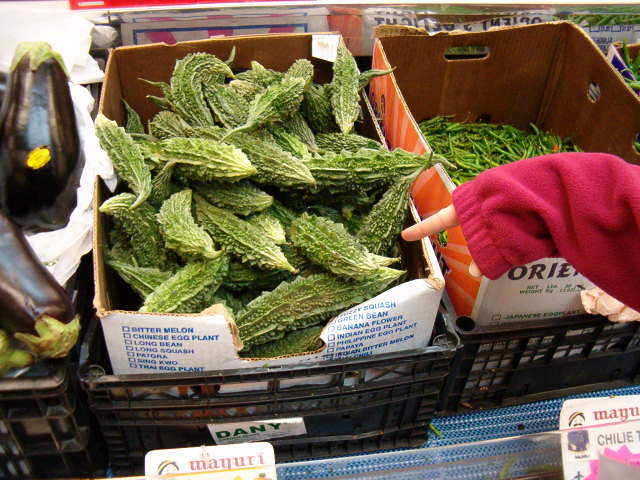
05 July 2006
I'm the Guy that does that Thing
 So I am AWOL from my normal life again, this time for a good two weeks. I have fled, once again , to the wilds of Virginia - but this time to the mountains, not to the sea. Oh, and I am about to be surrounded by 300 some-odd middle schoolers.
Because, you see, I have skills. Arcane and strange skills that involve the ability to make a fool of myself in front of large groups of people without collapsing into embarrassment, which comes in handy when you are wanting to do things like, oh, get hundreds of twelve-year olds to sing along with you.
I am, once again, doing that youthworker thang.
This time, though, it's a little different. Instead of being a grunt, I am actually the music leader at the Massanetta Springs Middle School Conferences for the month of July. Which means, hallelujah, I am being paid to be a musician (as most musicians will tell you, this is a rare and wondrous honor).
I've never done anything like this before. I've done some small-scale song leadership, but here I am hooked up with wireless microphones and power-point projectors and I am referred to in the planning schedules as one of the "Big 3" (along with the Keynote leader and the Recreation leader) and I get my own room. If you've never been to a youth event before, lemmetellya - your own room is worth more than gold.
So I have gotten my callouses back from playing guitar so much, and I have learned or re-learned about forty songs of various stripes from traditional hymns to "contemporary Christian" hits. Plus I've written one of my own - the theme song for the conference (which is standard practice for the music leader to do).
I premiered it for the staff this morning, and they were very enthusiastic about it, which was a very good thing (as I was and remain quite nervous about the whole enterprise. But hopeful, and prayerful, too).
So tomorrow the youth arrive, and this thing gets off the ground for real. I'm quite excited. And hopeful. And nervous.
And prayerful.
Subscribe to:
Posts (Atom)


